


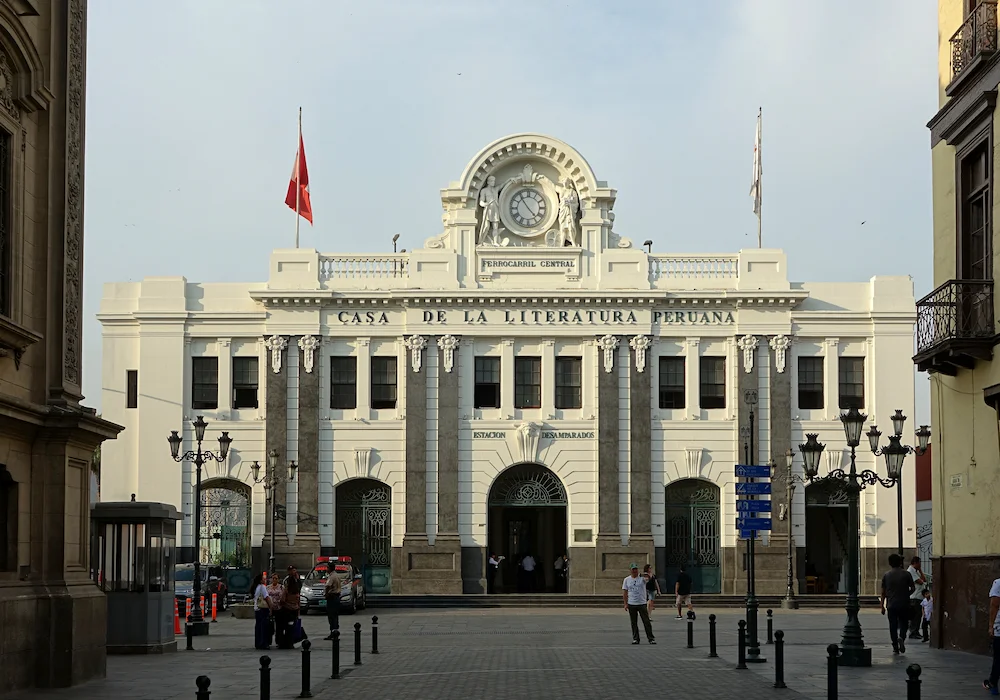
Situated immediately behind the Government Palace, along the scenic bluff overlooking the Rímac River and facing Cerro San Cristóbal, Desamparados Station stands as one of Peru's finest early 20th-century architectural summits. Inaugurated in 1912 as South America's most modern passenger terminus for the legendary Central Railway —the world's highest standard-gauge railway engineered by Ernest Malinowski—, its monumental structure designed by architect Rafael Marquina merges Beaux-Arts classicism with industrial wrought-iron engineering and an extraordinary English Art Nouveau stained glass skylight. Today, reborn as the House of Peruvian Literature, the historic railway station thrives as a free cultural landmark where oak ticket booths and vintage platforms celebrate literary titans like César Vallejo and Mario Vargas Llosa.
01 Name Origins & The Epic Saga of the Central Trans-Andean Railway
Nestled behind the Government Palace, along the natural bluff where Lima's Historic Downtown slopes towards the Rímac River basin, Desamparados Station recalls an era of profound industrial ambition and modern pride in Peru. Its unique name derives from the historical 17th-century Church and Hermitage of Our Lady of the Forsaken (Nuestra Señora de los Desamparados), a baroque sanctuary founded by the Jesuit order in 1672 that offered spiritual solace to riverside residents for more than two centuries.
By the late 19th century, the pressing economic necessity to connect the Pacific coast with the rich mineral deposits and fertile agricultural valleys of the central Andes demanded an unprecedented transportation feat. This ambition birthed the Central Railway of Peru (Ferrocarril Central del Perú), conceived by visionary American contractor Henry Meiggs and brilliantly engineered by Polish-Peruvian polymath Ernest Malinowski, national hero of the 1866 Battle of Callao.
A Triumph of Global Railway Engineering
The rail route defied the sheer abysses of the Peruvian Andes, climbing from sea level in Callao to conquer the Ticlio pass at an astounding 4,818 meters (15,807 feet) above sea level—standing as the highest standard-gauge railway on Earth for over a century. To welcome the thousands of travelers connecting Lima with La Oroya and Huancayo, the original wooden depot was replaced by the current monumental Beaux-Arts terminus, officially inaugurated in 1912.
The station served as the vital civic gateway through which Andean minerals, fresh highland produce from the Mantaro Valley, and generations of provincial migrants arrived in Lima, profoundly reshaping the demographic and cultural soul of the capital.
02 Rafael Marquina's Architecture: Beaux-Arts, Iron & English Stained Glass
Desamparados Station was designed by celebrated Peruvian architect Rafael Marquina y Bueno (1884–1964), the first Peruvian architect to graduate from Cornell University (USA) and mastermind of civic icons including the Archbishop Loayza Hospital and the Club de la Unión on Lima Main Square.
The building represents an exceptional dialogue between monumental French Beaux-Arts academicism and the technical innovations of the Industrial Era:
Monumental Facade in Roman Cement
Engineered with colossal Ionic pilasters, classical cornices, and an imposing semicircular pediment centered by the original station clock that regulated railway departures.
The English Art Nouveau Stained Glass
A sweeping central skylight of wrought iron and leaded stained glass crafted in England washes the grand passenger hall in warm, natural golden daylight.
Original American Oak Ticket Booths
Across the main concourse, authentic early 20th-century hardwood ticket windows survive intact, featuring vintage brass grilles and embossed metal typography.
The station was among the earliest major public structures in Peru to combine reinforced concrete with imported structural steel girders, providing superior seismic resilience through subsequent 20th-century tremors.
03 Historic Platforms & The Legendary Paquita Presidential Train Car
Descending the wide stairs to the track level reveals the original covered iron platforms where steam plumes and echoing brass whistles signaled passenger departures into the high Andes.
The crowning jewel preserved along the platform tracks is the legendary Presidential Train Car «Paquita»:
- British luxury railcraft: Handcrafted in the English workshops of the Metropolitan Amalgamated Railway Carriage Company for the Peruvian Corporation, tailored for official presidential state travels.
- Belle Époque palace on wheels: Affectionately named «Paquita» after Francisca Subercaseaux, wife of President Augusto B. Leguía, the salon car features polished mahogany woodwork, Murano crystal sconces, a private stateroom, brass bathroom fixtures, and a formal dining salon.
- Witness to state diplomacy: It transported Peruvian presidents including Leguía, Sánchez Cerro, and Manuel Prado, alongside visiting international heads of state traveling to review highland mining and agricultural works.
Today, the historic salon car is preserved in pristine museum condition and can be admired up close from the passenger platform.
04 The House of Peruvian Literature: Vallejo, Arguedas & Vargas Llosa
Following decades of passenger rail reduction, the station underwent an inspired cultural transformation. In October 2009, the Ministry of Education inaugurated the House of Peruvian Literature (Casa de la Literatura Peruana), transforming the historic depot into an active center for literary research, free public reading, and civic celebration of Peru's literary giants.
The permanent museum trail explores the major milestones of Peruvian writing through dynamic, interactive galleries:
César Vallejo & Avant-Garde Poetry
Galleries dedicated to the universal poet behind The Black Heralds and Trilce, displaying rare first editions, personal correspondence, and critical literary archives.
Mario Vargas Llosa Public Library
A welcoming, free public research library specialized in Peruvian and Latin American fiction, poetry, and social history, offering comfortable reading rooms.
Indigenous Narratives & Amazonian Voices
Exhibits celebrating José María Arguedas, Ciro Alegría, and the rich oral storytelling traditions of native Quechua, Aymara, and Amazonian cultures.
The cultural center hosts daily free creative writing workshops, family storytelling hours, book presentations, and historic guided platform tours.
05 Visiting Hours, Free Admission & Directions from Lima Main Square
Desamparados Station stands out as one of the most welcoming, picturesque, and accessible public cultural centers in Historic Downtown Lima. Keep these visiting details in mind:
Exact Address
Jirón Áncash 207, Historic Center of Lima. Located directly behind Government Palace, near the stone bridge crossing the Rímac River.
Operating Hours
Tuesday through Sunday: 10:00 AM – 07:00 PM.
Mondays: Closed for weekly facility maintenance.
Admission Cost
100% Free. No entry tickets, prior reservations, or visitor registration are required.
Reaching the station on foot from Lima Main Square is effortless: simply walk one short block northward along Jirón Carabaya (flanking Government Palace) and turn right onto Jirón Áncash. The walk takes under three minutes along well-patrolled pedestrian walkways.
06 Practical Tips: Photography, Literary Cafe & Nearby Riverwalk Highlights
To make the most of your visit to the station and its riverside historic surroundings, consider these recommendations:
Allow 45 minutes to 1 hour to admire the stained glass ceiling, photograph the vintage ticket booths, explore the literary rooms, and inspect the presidential train car.
Looking up at the Art Nouveau stained glass from the center of the passenger hall produces one of downtown Lima's most breathtaking architectural photos.
An artisan coffee bar operates directly on the vintage platform, allowing you to enjoy award-winning Peruvian coffee while looking out over the railway tracks.
Stepping outside, you will enjoy unobstructed vistas of the cross atop Cerro San Cristóbal, and can easily stroll toward the Stone Bridge and Chabuca Granda Promenade.
07 Premier Historic Lima Tours & Booking with Lima Tour Peru
Touring Desamparados Station and its surrounding viceregal and republican treasures with an official bilingual guide unlocks deep historical context in complete comfort:
Colonial & Modern Lima City Tour
Classic 4-hour half-day journey: Main Square, Desamparados Station and Government Palace facades, San Francisco Catacombs, and Miraflores parks.
From US$ 35 per personColonial City Tour + Buffet Lunch
Comprehensive cultural exploration through Lima's architectural monuments, culminating with an oceanfront Peruvian gourmet buffet at Mangos Miraflores.
From US$ 70 per personAll experiences feature climate-controlled vehicles with hotel pickup in Miraflores, San Isidro, and Barranco, professional licensed drivers, and certified bilingual guides. Inquire today via our Contact Us page.
Explore more guides from our collection: Lima Main Square Complete Guide · Archbishop's Palace of Lima · Lima Cathedral & Pizarro's Crypt.
08 Frequently Asked Questions about Desamparados Station
How and how far in advance should travelers purchase tickets for the scenic Lima–Huancayo tourist train?
The Ferrocarril Central Andino scenic passenger service is seasonal and exclusive, operating approximately 10 to 12 scheduled departures per year between April and November (aligned with national holidays such as Easter and Independence celebrations). Because seating in the Classic and Tourist Lounge cars (featuring an open-air observation bar) is strictly limited, bookings should be secured 4 to 8 weeks in advance through the official rail operator or licensed travel agencies.
What family reading workshops and children's activities are hosted at Casa de la Literatura on weekends?
The center houses the «Cota Carvallo» Children and Young Adults Reading Hall, which hosts free weekend oral storytelling sessions featuring Andean and Amazonian legends, Japanese paper theater (kamishibai), interactive children's book clubs, and creative poetry workshops designed for families and children from 4 years old.
Which master Peruvian authors were inspired by the historic setting of Desamparados Station?
The railway terminal stood as an eyewitness to the mid-century Andean migration and the journeys of Peru's intellectual giants. Authors like Mario Vargas Llosa frequented the district in his youth, depicting it in his urban chronicles; master short-story teller Julio Ramón Ribeyro portrayed poignant platform farewells, and José María Arguedas revered the station as the living bridge connecting the highland Quechua world with coastal Lima.
Can visitors directly access Parque de la Muralla from behind Desamparados Station?
Yes. Behind the station platform, a scenic pedestrian overlook facing the Rímac River valley connects via stairs and public walkways directly into the gardens and colonial river bastions of Parque de la Muralla, creating a seamless and safe walking promenade away from street vehicle traffic.
Why was Rafael Marquina's architecture at Desamparados a revolutionary landmark against earthquakes in Lima?
Following centuries of catastrophic earthquakes that flattened colonial adobe and mud-brick churches across the capital, Desamparados Station (1912) was among Peru's very first monumental public structures engineered entirely with reinforced concrete and imported structural steel columns. Thanks to this pioneering seismic design, the terminal survived the massive Lima earthquakes of 1940, 1966, and 1974 without structural damage.