

Within a handful of city blocks laid out by Francisco Pizarro in 1535 stand a historic cathedral with a cryptic tomb, hand-carved viceregal wooden balconies, catacombs holding thousands of burials, and a free presidential guard-changing ceremony. The real challenge isn't what to see: it's how to navigate it without wasting hours in lines, traffic, or shallow explanations. This comprehensive guide provides the optimal route, practical facts, and insider advice to do it right.
01 What to know before exploring the historic center of Lima
The historic center is the foundational heart of Peru's capital, celebrated as "Pizarro's Grid" (Damero de Pizarro) for its orderly chessboard urban layout. It concentrates the finest colonial architecture in Lima and is navigated almost entirely on foot, making it the quintessential first stop on any trip to the city.
- Starting Point: Plaza San Martín and the pedestrian Jirón de la Unión leading directly to the Plaza Mayor.
- Recommended Time: 2.5 to 4 hours; full half-day (4 to 5 hours) if entering the Cathedral and the catacombs.
- Best Hours: Morning from 9:00 AM to 1:00 PM (cooler weather, lighter traffic, and fully accessible monuments).
- Entrance Fees: The Cathedral and San Francisco Monastery require entry tickets; confirm rates prior to visit.
- Free Highlights: Strolling historic plazas, Jirón de la Unión street life, and the changing of the guard ceremony.
- Tour with us: Colonial & Modern Lima City Tour from US$ 35 per person.
02 History & Origins: From City of Kings to UNESCO Heritage
Lima was founded in 1535 by Spanish conquistador Francisco Pizarro as the "City of the Kings" (Ciudad de los Reyes). For nearly three centuries, it served as the political, administrative, and religious capital of the Viceroyalty of Peru—the primary seat of Spanish imperial power in South America.
Recurring earthquakes—most notably the catastrophic tremor of 1746—compelled successive generations to rebuild the city. This created the captivating urban mosaic seen today: Andalusian baroque facades, intricate carved wooden balconies, neoclassical mansions, and early 20th-century civic monuments. UNESCO recognized this extraordinary urban ensemble by inscribing the historic center on the World Heritage List in 1988, expanding it in 1991.
City of Kings (1535)
Established as the supreme viceregal capital governing Spanish colonial territories across South America.
1746 Quake & Balconies
Post-earthquake reconstruction produced the iconic closed wooden balconies that define Lima's visual silhouette.
UNESCO World Heritage
Inscribed in 1988 and 1991 for preserving exceptional colonial religious art, baroque cloisters, and urban integrity.
Curious to explore the square where it all began with an official licensed guide? Discover our guided Plaza Mayor & Colonial Lima City Tour.
03 Main Attractions: Step-by-Step Walking Route
This is the proven walking sequence our licensed guides follow with private travelers to optimize morning lighting, bypass backtracking, and ensure a seamless cultural exploration:
1. Plaza San Martín & Jirón de la Unión
Plaza San Martín offers an elegant starting point for our half-day city tours: grand republican arcades, marble fountains, and equestrian monument to the liberator. From here, pedestrian Jirón de la Unión connects directly to the main plaza in a brief scenic walk.
2. Plaza Mayor (Plaza de Armas)
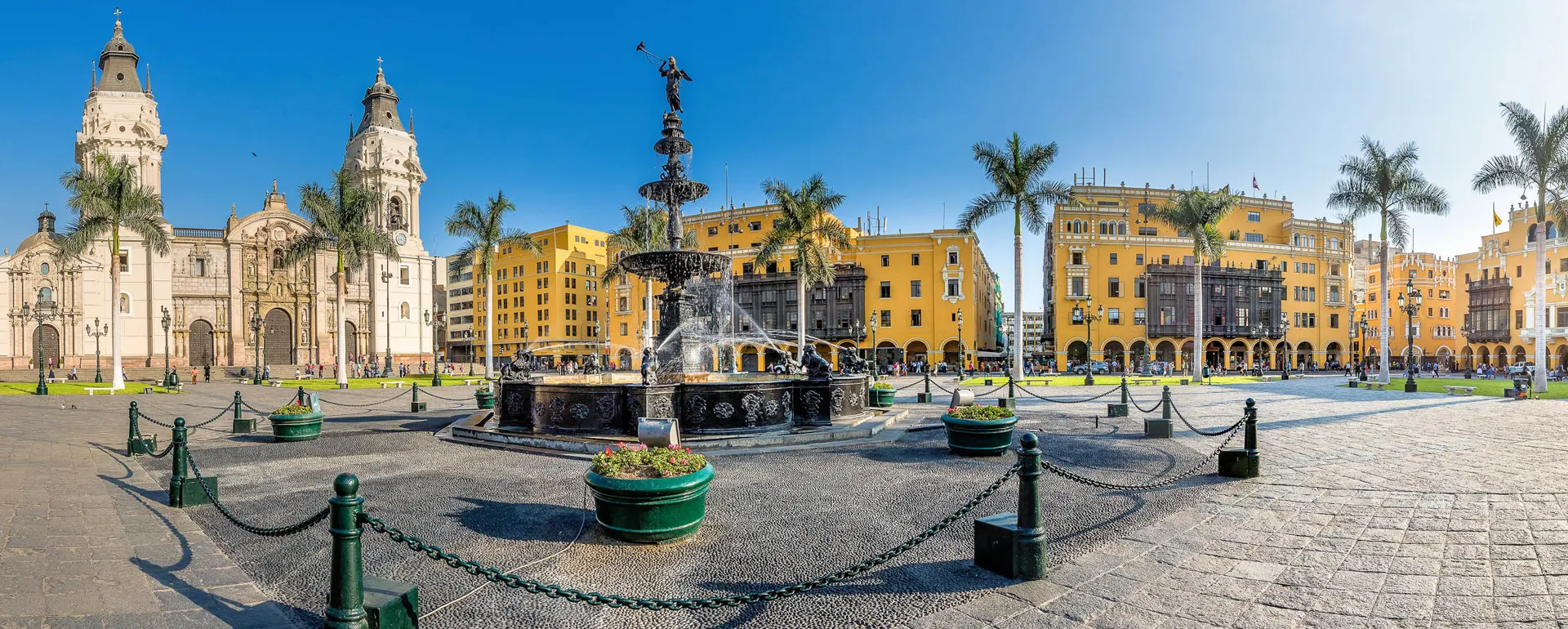
The monumental epicentre of the capital frames the Cathedral of Lima, the Government Palace, the Archbishop's Palace, and Municipal Hall. In the center stands a bronze fountain cast in 1651, remaining the symbolic origin point of the city.
3. Cathedral of Lima
Erected upon the exact parcel Pizarro allocated for the first cathedral in 1535. Highlights include intricate cedar choir stalls, baroque side chapels, religious art museum, and the marble chapel housing the conqueror's remains. Explore it with licensed commentary on our Colonial & Modern Lima City Tour.
4. Government Palace & Changing of the Guard
Occupying the site of the viceregal governor's palace, this remains the official residence of Peru's president. Travelers gather daily around noon to watch the solemn changing of the guard ceremony from the perimeter gates facing the main plaza.
5. Archbishop's Palace
Inaugurated in 1924, this neo-colonial masterpiece features sculpted stone facades and exquisite carved cedar balconies inspired by viceregal palaces.
6. San Francisco Monastery & Catacombs
A glorious baroque monument renowned for its vast cloister library holding 25,000 ancient texts and subterranean burial chambers utilized until 1810 with tens of thousands of human remains. Priority entrance and expert guided access are included in our Colonial Lima & Catacombs Tour.
7. Colonial Mansions: Torre Tagle Palace
Intricate enclosed wooden balconies with Moorish latticework represent viceregal Lima's signature art form. Palacio de Torre Tagle stands as the finest example, accompanied nearby by Casa Aliaga and Casa Osambela.
8. City Wall Park (Parque de la Muralla)
An excavated section of the 17th-century defensive city wall restored along the banks of the Rímac River with scenic views of San Cristóbal hill.
04 Where to Eat & What to Try in Downtown Lima
Historic Lima features a rich dining spectrum spanning centuries-old taverns, homely Creole eateries, and vibrant Asian fusion quarters:
Historic Cafes & Pastries
Enjoy freshly fried churros filled with dulce de leche, delicate alfajores, and rich hot chocolate at time-honored spots like Bar Cordano.
Classic Creole Fare
Savor velvety Ají de Gallina, wok-seared Lomo Saltado, or savory Tacu Tacu inside restored viceregal townhouses and taverns.
Chinatown (Chifa Fusion)
Just steps from the Central Market, Calle Capón serves authentic Peruvian-Chinese chifa: smoky Arroz Chaufa, crispy wontons, and dim sum.
Traditional Pisco Sour
Taste Peru's national cocktail crafted with Quebranta grape pisco in distinguished historical venues like the Gran Hotel Bolívar.
If food is your primary passion, combine this route with our Lima Gastronomic Tour (market visits, ceviche and pisco masterclass) or browse all our gastronomic culinary experiences.
05 Practical Tips & Recommendations for Your Visit
To ensure an enjoyable, safe, and comfortable experience navigating historic downtown Lima, keep these expert local tips in mind:
You'll encounter lighter traffic, pleasant morning weather, and fully open museums and churches. Avoid commuting between 5:00 PM and 6:30 PM rush hours.
You'll walk across uneven colonial cobblestones. In winter (June to October), coastal sea fog requires a light jacket; in summer, wear sun protection.
Small traditional eateries, historic cafes, and public amenities often accept cash only. Carry small bills (S/ 10, S/ 20) and coins.
The tourist zone has active Tourism Police patrols, but remains a bustling commercial center. Keep bags in front, stay alert in crowded intersections, and review our safety recommendations in the FAQ section below or reach out through Contact Us.
Religious processions (such as Lord of the Miracles in October) or government ceremonies may temporarily alter vehicular or pedestrian access to the main square.
Dedicate morning hours to viceregal heritage and spend the afternoon along the Miraflores clifftop boardwalk and Barranco's bohemian art galleries.
Free walking tour, shared tour, or private tour: which should you choose?
06 Private Tours & Packages with Lima Tour Peru
As an official inbound operator licensed by MINCETUR and PROMPERU with over 15 years of operational excellence, our private programs link colonial history with vibrant modern Lima in comfort and style:
Colonial & Modern Lima City Tour
Comprehensive 4-hour tour: Historic Center, Plaza Mayor, San Francisco Catacombs, Miraflores, and Malecón cliffs.
From US$ 35 per personCity Tour + Gourmet Lunch Experience
The complete 5-hour journey concluding with an exquisite Peruvian lunch at Mangos, Larco Museum Cafe, or Casa Tambo.
From US$ 70 per personPrivate Larco Museum Tour
Discover pre-Columbian gold, silver masterworks, and famed erotic ceramics housed inside an 18th-century viceregal mansion.
From US$ 50 per personTailor-Made Custom Journeys
We craft custom itineraries connecting Lima, Paracas, Ica, Huacachina, Nazca, and Cusco with 24/7 dedicated local assistance.
Customized quoteAll private excursions feature 24/7 client support and accept secure online payments via credit/debit card, PayPal, and bank transfers. Discover additional options in our half-day tours in Lima or message us directly from Contact Us.
Recommended reading: Ballestas Islands Travel Guide · Exploring Barranco & Pachacamac · Modern & Colonial Lima Tours · Magic Water Circuit (Lima by Night).
07 Frequently Asked Questions about Lima's Historic Center
How long does it take to tour the historic center of Lima?
Between 2.5 and 4 hours on foot if you only view building exteriors and the Plaza Mayor. If you enter the Cathedral and San Francisco Monastery with its catacombs, plan for a full half-day (4 to 5 hours).
Is it safe to walk around Lima's historic center?
Yes, tourist areas have regular police presence, but keep phones and daypacks secure, avoid flashing valuables, and stick to well-traveled streets. An official tour guide reduces hassle and saves valuable time.
Can you enter the Government Palace?
The changing of the guard ceremony can be watched free of charge from the perimeter gates on the Plaza Mayor. Interior state visits depend on official government schedules and advance registration.
What is the best time of day to visit downtown Lima?
In the morning between 9:00 AM and 1:00 PM. Traffic is lighter, summer temperatures are milder, and historic monuments are fully open. Avoid commuting between 5:00 PM and 6:30 PM peak rush hours.
What is the difference between a free walking tour and a private tour?
A free walking tour operates with large mixed groups, relies on tips, and excludes entrance tickets or hotel transport. A private tour provides a licensed guide exclusively for your group, air-conditioned transport with driver, flexible pacing, and door-to-door assistance.
How much does the Lima historic center tour cost with Lima Tour Peru?
The Colonial & Modern Lima City Tour starts from US$ 35 per person, and the version with gourmet lunch starts from US$ 70. Prices vary based on group size and service level; contact us via WhatsApp to confirm current rates.
Why is Lima's historic center a UNESCO World Heritage Site?
UNESCO inscribed it in 1988 and expanded it in 1991 for preserving Francisco Pizarro's original 1535 urban grid and an exceptional concentration of churches, convents, mansions, and carved wooden balconies representing Spanish viceregal power in South America.