


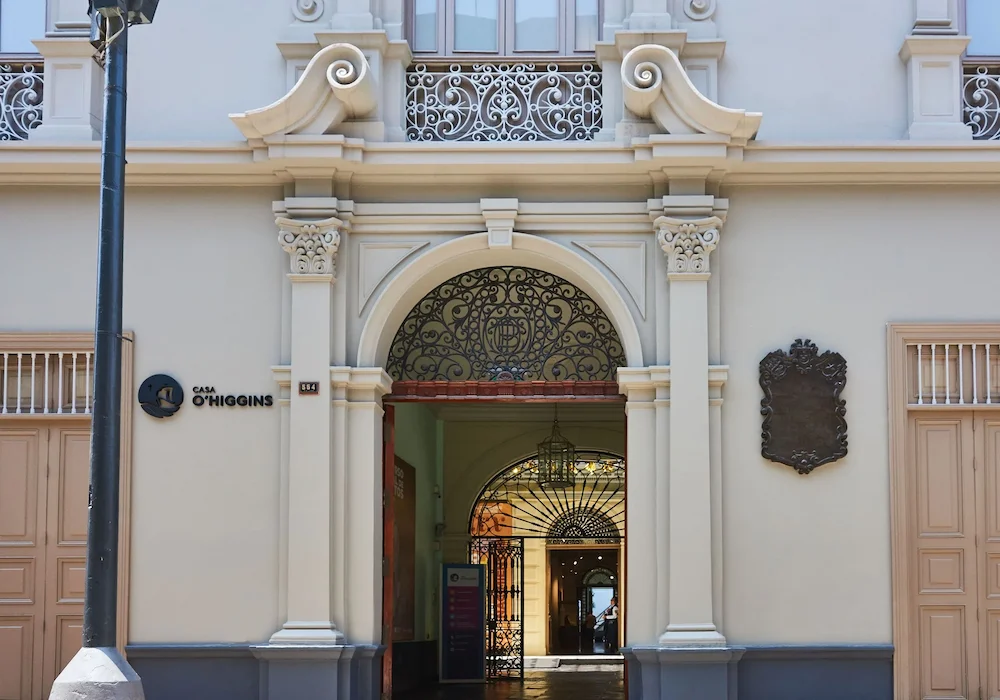
Standing along the vibrant pedestrian thoroughfare of Jirón de la Unión, barely two blocks from Lima's Main Square, Casa O'Higgins endures as one of the most captivating architectural landmarks illustrating the transition from viceregal splendor to the early Republic. The youth residence and later exile home of Bernardo O'Higgins Riquelme —pivotal South American independence hero and Supreme Director of Chile—, this distinguished 18th-century mansion preserves traditional stone courtyards, wooden galleries, and wrought-iron balconies that now house an active cultural center curated by the Pontifical Catholic University of Peru (PUCP). In this guide, explore its binational heritage, renowned folk art exhibits, and practical tips for your historic walking tour.
01 Historical Origins: From Colonial Plot to Bernardo O'Higgins' Residence
The land upon which Casa O'Higgins stands today originated as one of the primary plots partitioned immediately following the 1535 founding of Lima by Spanish conquistadors. Situated along the historic Calle de Espaderos (Swordsmiths' Street, now block 5 of Jirón de la Unión), the property belonged across the 16th and 17th centuries to prominent viceregal noble families before passing into the hands of royal crown official Juan Bautista de Olavegoya in the late 1700s.
The mansion achieved continental historical resonance during the early 19th century through its most illustrious inhabitant: Bernardo O'Higgins Riquelme. Son of Ambrosio O'Higgins, Viceroy of Peru (Marquess of Osorno), and Chilean noblewoman Isabel Riquelme, the future independence leader traveled to Lima in his youth to pursue higher education at the prestigious Real Convictorio de San Carlos, taking up periodic residence in this very house.
Refuge of Exile and Continental Brotherhood
After voluntarily stepping down as Supreme Director of Chile in 1823 to avert civil strife, O'Higgins arrived at Callao harbor and chose Peru as his adopted homeland. In this noble Lima residence, he established his family household for nearly two decades, hosting independence veterans, foreign diplomats, and intellectuals until his death in Lima in 1842.
Throughout the 20th century, the residence withstood the intense commercial transformation of Jirón de la Unión. Recognizing its irreplaceable heritage value, the Peruvian Government declared it a National Historic Monument in 1972, subsequently assigning it to the Pontifical Catholic University of Peru (PUCP) for comprehensive architectural restoration.
02 Viceregal Architecture: Stately Courtyards, Stone Portals & Balconies
Casa O'Higgins embodies the classical late 18th-century Lima patrician residence, masterfully engineered with structural adobe brick masonry combined with earthquake-resistant quincha (woven coastal cane bundled with mud and plaster) on the upper levels—an architectural technique that allowed it to survive major regional tremors in 1940 and 1974.
Crossing the traditional stone-paved entry vestibule (zaguán), visitors step into an exceptionally harmonious and peaceful spatial layout:
The Main Cloistered Courtyard
An expansive stone-paved courtyard encircled by open colonnaded galleries and hand-turned wooden pillars on two stories, facilitating cross-ventilation and natural daylight.
Wrought-Iron Balconies & Lattices
Along the street facade and second-floor galleries, wooden parapet balconies (balcones de antepecho) feature delicate neoclassical wrought-iron grilles.
The Stately Split-Flight Staircase
Constructed from solid cedar and oak timbers, the main staircase ascends elegantly from the courtyard to the private residential quarters of the O'Higgins family.
Behind the main courtyard lies a second traditional courtyard (traspatio), originally utilized as a domestic orchard and stables, now adapted into an intimate garden courtyard featuring an academic bookstore and cultural coffee corner.
03 Bernardo O'Higgins in Peru: Youth, Independence & Lima Exile
Few figures embody the deep-rooted brotherhood between Peru and Chile as profoundly as Bernardo O'Higgins. His connection with Lima unfolded across three pivotal historical chapters:
- Colonial Formative Years (1790–1794): As a young university student at the San Carlos Convictory (today's Casona de San Marcos), O'Higgins absorbed the revolutionary Enlightenment ideas championed by Creole thinkers such as Toribio Rodríguez de Mendoza.
- Sponsorship of the Liberating Expedition (1820): As Supreme Director of Chile, he co-organized, funded, and equipped the Liberating Fleet alongside General José de San Martín, which sailed northward to Paracas to proclaim Peruvian Independence at Lima Main Square.
- The Diplomatic Republican Exile (1823–1842): He lived in this Lima home and his coastal estate in Cañete Valley, maintaining strategic correspondence with Simón Bolívar and contributing to the stability of the young Peruvian Republic until his death on October 24, 1842.
On the mansion's second floor, an intimate biographical memorial room displays period oil portraits, facsimiles of handwritten correspondence, ceremonial military regalia, and international medals commemorating his pivotal role in South American liberation.
04 The PUCP Cultural Center: Peruvian Folk Art & Contemporary Galleries
Far from an inert relic, Casa O'Higgins functions as a vibrant cultural center in Historic Downtown Lima. Curated by PUCP's prestigious Riva-Agüero Institute, its galleries host rotating exhibitions from the Museum of Popular Arts and Traditions:
Ayacucho Retablos & Folk Ceramics
Masterful miniature altarpieces (retablos) crafted by celebrated Ayacucho artisan dynasties, alongside Pucará ceramic bulls and traditional pottery from Quinua and Chulucanas.
Carved Gourds & Indigenous Textiles
Delicately pyro-engraved gourds (mates burilados) illustrating communal Andean folk tales, paired with backstrap-loom weavings dyed with natural native minerals and cochineal.
Contemporary Visual Arts & Photography
Temporary exhibit spaces showcasing Peruvian documentary photography, contemporary fine arts, and heritage preservation initiatives.
Admission to all galleries is free, making Casa O'Higgins an enriching cultural oasis along pedestrian Jirón de la Unión.
05 Visiting Hours, Location & Walking Directions along Jirón de la Unión
Casa O'Higgins occupies an optimal position along the capital's primary pedestrian boulevard. Below is essential visiting information for your walking itinerary:
Exact Address
Jirón de la Unión 554, Historic Center of Lima. Located between Jr. Huancavelica and Jr. Santa Rosa (historical Swordsmiths' Street).
Visiting Hours
Tuesday through Sunday: 10:00 AM – 07:00 PM.
Mondays: Closed for museum maintenance and gallery curation.
Admission Fee
100% Free for all local and international travelers. No prior reservation or ticket purchase is required.
Because it sits on a pedestrianized boulevard, tourist vehicles comfortably drop guests off at nearby Plaza Mayor or La Merced church atrium, from where it is an effortless two-minute stroll across patrolled historic stone walkways.
06 Practical Visitor Tips: Photography, Walking Routes & Nearby Mansions
To ensure an enjoyable, safe visit and connect it smoothly with nearby landmarks across the colonial grid, keep these tips in mind:
Plan for 30 to 45 minutes. This allows ample time to enjoy the colonnaded courtyards, photograph the wooden galleries, and browse the rotating folk art collections.
Non-commercial photography without flash or tripods is permitted throughout courtyards and exhibition rooms. Soft natural courtyard light creates wonderful architecture portraits.
Combine your stop with the ornate baroque Basilica of La Merced (one block south), the Archbishop's Palace of Lima, and Lima Cathedral at Main Square.
The peaceful rear garden courtyard offers clean restrooms, quiet seating, and an academic bookstore—an ideal spot to recharge during a busy walking tour.
07 Premier Historic Lima Tours & Booking with Lima Tour Peru
Exploring Historic Lima accompanied by an official bilingual guide unlocks centuries of architectural symbolism and forgotten viceregal legends in complete safety:
Colonial & Modern Lima City Tour
Classic half-day journey: Main Square, historic mansion exteriors, San Francisco Monastery Catacombs, panoramic Huaca Pucllana view, and Love Park.
From US$ 35 per personColonial City Tour + Gourmet Lunch
Extended 5-hour cultural journey pairing comprehensive historic sightseeing with a distinguished oceanfront Peruvian gourmet buffet at Mangos Miraflores.
From US$ 70 per personAll departures feature climate-controlled transportation, professional licensed drivers, door-to-door hotel transfers in Miraflores, San Isidro, and Barranco, and certified bilingual guides. Reach out today via our Contact Us page.
Explore more from our guide series: Archbishop's Palace of Lima · Lima Main Square Complete Guide · Lima Cathedral & Pizarro's Crypt.
08 Frequently Asked Questions about Casa O'Higgins in Lima
What cultural activities and interactive workshops does PUCP host at Casa O'Higgins?
Beyond permanent exhibition galleries, PUCP regularly hosts live master-artisan demonstrations featuring folk masters from Ayacucho, Junin, and Cusco, specialized academic lectures on viceregal heritage, and book launches in the cloistered courtyard. These events are open to the public free of charge, subject to gallery capacity.
Can visitors purchase certified folk art or authentic artisan crafts during their visit?
Yes. Inside the mansion, designated pop-up shops and artisanal craft fairs curated by the Riva-Agüero Institute allow visitors to purchase authentic Ayacucho retablos, glazed ceramics, backstrap-woven Andean textiles, and hand-carved gourds bearing certification of authenticity that directly supports native artisan communities.
Does Casa O'Higgins provide accessibility facilities for travelers with reduced mobility?
Street access from the pedestrian Jirón de la Unión and the main cloistered courtyard are step-free with gentle ramps, enabling comfortable wheelchair access across the primary ground-floor folk art galleries. For the upper wooden galleries and historical balconies, cultural center staff provides dedicated assistance and adapted accessible guidance.
What was Bernardo O'Higgins' connection to the Montalban Estate in Cañete and how is it reflected in Lima?
In recognition of his decisive leadership in continental South American liberation, the Peruvian Congress granted O'Higgins the Montalbán and Cuiva agricultural estates in the Cañete Valley. The patriot spent his two decades of exile alternating between managing farming innovations in Cañete and his urban townhouse in Lima, where diplomatic correspondence and archival records of that historic bond are preserved.
Why were the lattice balconies along Jirón de la Unión historically nicknamed "cages of the cloaked women"?
During the 18th and 19th centuries, noble Lima ladies—celebrated as «tapadas limeñas» for draping their silhouette in silk skirts and hooded mantles showing only one inquisitive eye—utilized the intricate Moorish wooden lattice screens (celosías) to observe religious processions and street life along Calle de Espaderos unseen from below, inspiring this famous colloquial literary phrase.