

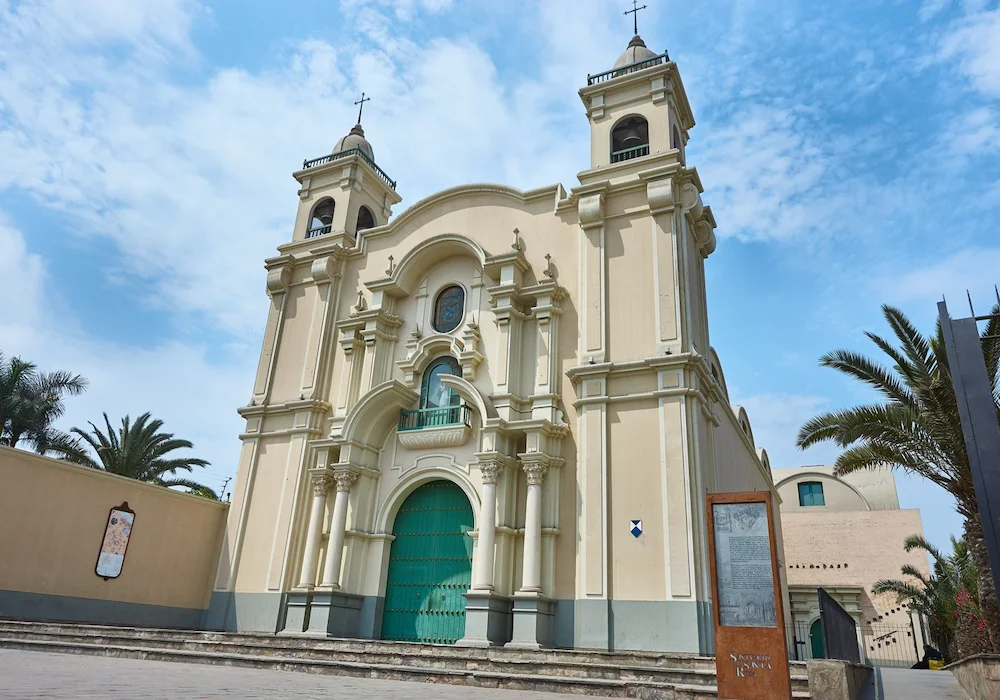
Born in Lima on April 20, 1586, as Isabel Flores de Oliva and universally known as "Rosa" for her spiritual devotion and grace, Saint Rose of Lima was canonized in 1671 by Pope Clement X, becoming the very first canonized saint of the Americas and the Philippines, and principal patroness of the Americas, the Indies, and the Peruvian National Police. Her life of profound charity, mystical contemplative prayer, and selfless care for the destitute and sick left an indelible legacy on Peruvian culture. Located on Avenida Tacna on the exact ground where she was born and raised, the Sanctuary of Saint Rose of Lima preserves her most poignant relics: the rustic adobe hermitage she built with her own hands in the garden, the ancient fig tree, and the miraculous Wishing Well, where thousands of pilgrims cast letters of prayer and gratitude each year.
01 Life of Isabel Flores de Oliva: From Lima Youth to 1671 Canonization
Isabel Flores de Oliva was born in Lima on April 20, 1586, to a modest viceregal family headed by Puerto Rican arquebusier Gaspar Flores and limeña María de Oliva. According to historical tradition, shortly after birth her indigenous nurse witnessed her baby face gently transform into the likeness of a radiant rose. Her mother and family henceforth affectionately called her "Rosa," a name confirmed years later by Archbishop Saint Toribio de Mogrovejo during her sacrament of confirmation.
From early youth, Rosa dedicated herself to God through private vows of perpetual virginity. She joined the Third Order of Saint Dominic (Dominican tertiary), wearing the habit of white and black while continuing to reside with her family rather than entering an enclosed convent. This enabled her to dedicate her daily life to the direct spiritual and physical care of Lima's most vulnerable souls: enslaved Africans, native servants, and the destitute sick whom she tended in a humble infirmary she established at home.
First Canonized Saint of the Americas
Passing away on August 24, 1617, at the young age of 31, her passing stirred grief across the viceroyalty. She was beatified in 1668 by Clement IX and canonized on April 12, 1671, by Pope Clement X, who declared her Principal Patroness of the Americas, the West Indies, and the Philippines.
02 The Sanctuary of Saint Rose: History of Her Birthplace
The Sanctuary of Saint Rose of Lima stands upon the exact colonial parcel owned by the Flores de Oliva family on the first block of Avenida Tacna (intersection with Jr. Callao). Shortly following her 1671 canonization, the property was consecrated as a dedicated sanctuary and convent honoring the beloved limeña saint.
The present architectural ensemble unites Baroque church architecture with serene Andalusian interior courtyards planted with flowering shrubs, climbing vines, and palms that evoke the domestic garden where Rosa prayed and composed spiritual poetry:
The Sanctuary Church
Constructed in the early 18th century, housing gilded colonial altarpieces, viceregal paintings, and the side chapel marking the exact room where Rosa was born in 1586.
The Cloister Gardens
A tranquil haven of peace amidst Lima's bustling downtown streets. Preserves the ancient fig tree and stone meditation walkways used by the saint.
03 The Wishing Well, the Adobe Hermitage & the Sacred Garden
Within the sanctuary's rear courtyard stand the two most poignant physical relics of Saint Rose's life:
The Miraculous Wishing Well
A 19-meter-deep (62-foot) stone well that supplied fresh water to the residence. Legend recounts that Rosa dropped the key to her iron penitential belt into its depths. For three centuries, millions of pilgrims have tossed letters of prayer and thanksgiving into the well.
The Hand-Built Adobe Hermitage
A tiny spiritual retreat constructed in 1614 with sun-dried adobe bricks and river cane by Saint Rose and her brother Fernando. Measuring barely 2 square meters, it was her sacred haven of silent contemplative prayer.
The Sacred Fig Tree
In the courtyard thrives an ancient fig tree that tradition attributes to Saint Rose's loving care. Believers reverently collect fallen leaves as a symbol of divine blessing, healing, and peace for their households.
04 Comparison Guide of Relics & Sacred Spaces within the Sanctuary
Overview of the principal sacred spaces and relics to explore during your visit:
| Sanctuary Relic / Space | Complex Location | Admission & Access | Devotional Significance |
|---|---|---|---|
|
Most Revered The Wishing Well (Pozo de los Deseos) |
Central garden courtyard | Free / Public Access | Centuries-old pilgrimage tradition of dropping handwritten petition letters |
| The Adobe Hermitage | Southern end of garden | Free / Public Access | Original 1614 adobe prayer cell built by Saint Rose and her brother |
| Birth Room & Infirmary Chapel | Church Interior Chapel | Free / Public Access | Sacred spot of her 1586 birth and home medical care for the destitute |
| The Historic Fig Tree | Courtyard grounds | Free / Public Access | Living botanical relic from viceregal times associated with her memory |
05 The August 30 Feast Day & the Tradition of Letters
Every August 30 (an official national holiday across Peru), the Sanctuary of Saint Rose becomes the epicenter of Lima's faith. Beginning at dawn, hundreds of thousands of pilgrims wait patiently in multi-block queues along Avenida Tacna to deposit their letters into the Wishing Well.
The tradition of penning letters to Saint Rose dates back to the 17th century, when limeños of all social strata entrusted their petitions to her celestial intercession. Today, the Archdiocese of Lima manages an international digital inbox allowing devotees worldwide to email their prayers, which volunteers lovingly print and drop into the well during solemn feast day masses.
06 The Saint Rose Pilgrimage: Sanctuary, Santo Domingo & Cathedral
To experience the full historical and spiritual narrative of Saint Rose, visitors follow the Circuit of Lima's Saints:
1. Saint Rose Sanctuary
Her birthplace on Avenida Tacna, featuring the adobe cell, sacred fig tree, and the miraculous Wishing Well.
2. Santo Domingo Convent
4 blocks away: where the skull and physical relics of Saint Rose and Saint Martin de Porres are enshrined in silver altars.
3. Lima Cathedral
On the Main Square: the Saint Rose Chapel adorned with colonial artwork and the historic baptismal font from 1586.
07 Cultural & Religious Journeys with Lima Tour Peru
At Lima Tour Perú, we offer enriching guided excursions exploring viceregal cultural and religious heritage, guided by certified local historians:
Colonial & Modern Lima City Tour
Visit Saint Rose Sanctuary, Las Nazarenas, Santo Domingo Convent, Main Square, Cathedral, and Miraflores cliffs.
From US$ 35 per personViceregal Faith & Sacred Art Circuit
Private custom journey exploring viceregal cloisters, subterranean crypts, and priceless colonial art treasures.
Custom QuoteFor private tour arrangements or personalized assistance, contact our travel specialists via our Contact Us page.
Recommended reading: Las Nazarenas & The Lord of Miracles · Complete Historic Center Guide · Lima Cathedral & Sacred Art Museum.
08 Frequently Asked Questions about Saint Rose of Lima
Why do pilgrims drop letters into the Wishing Well and what is its historical origin?
The 19-meter-deep (62-foot) stone well supplied freshwater to Rosa's family home. According to tradition, Rosa threw the key to the padlock of the heavy iron chain she wore bound around her waist as penance into the well. Over the centuries, believers began writing letters seeking her intercession for health, family, and spiritual comfort, dropping them into the well. Today, an official email address is maintained by the sanctuary so overseas devotees can have their petitions printed and deposited into the well.
Where are the sacred relics and skull of Saint Rose of Lima preserved?
The mortal remains and skull of Saint Rose are not housed at the Av. Tacna sanctuary, but rather at the nearby Basilica and Convent of Santo Domingo (four blocks away at Jr. Camaná and Conde de Superunda). There, visitors can venerate the magnificent Altar of the Peruvian Saints, which enshrines the silver reliquaries containing Saint Rose of Lima, Saint Martin de Porres, and Saint John Macias.
Is there an entrance fee for the Sanctuary of Saint Rose and what are the opening hours?
Admission to the Sanctuary of Saint Rose, including its courtyard gardens, adobe hermitage, and the well, is completely free of charge. It is open Monday through Sunday during morning and afternoon visiting hours (typically 9:00 a.m. to 1:00 p.m. and 3:00 p.m. to 6:00 p.m.). Visitors are requested to observe reverent silence and dress respectfully.
What takes place at the sanctuary during the annual August 30 feast day?
August 30 is an official national holiday across Peru. On this day, the sanctuary welcomes hundreds of thousands of pilgrims from across the nation and abroad. Lines of devotees awaiting their turn to cast letters into the well extend for blocks along Avenida Tacna. Solemn open-air masses are celebrated, and an ornate procession of her image winds through historic streets escorted by the National Police.
How can a visit to the sanctuary be combined with other nearby downtown attractions?
The sanctuary sits at a prime cultural crossroads: crossing Avenida Tacna leads directly to Las Nazarenas Sanctuary (home of the Lord of Miracles); walking three blocks east brings you to Santo Domingo Convent, and four blocks east lies the Main Square, Lima Cathedral, and Government Palace. The complete walking circuit takes roughly 2 to 3 hours.