

Proclaimed a Cultural Heritage of the Americas and crowned year after year at the World Travel Awards, Peruvian gastronomy is the extraordinary culmination of five millennia of pre-Columbian Andean agriculture seamlessly blended with Spanish, African, Cantonese Chinese, Japanese, and Italian culinary heritage. As the undisputed culinary capital of South America, Lima represents the vibrant stage where this flavor symphony flourishes: from bustling harbor ceviche counters to world-renowned Michelin-caliber establishments. In this comprehensive food guide, we examine essential dishes, their cultural origins, and the premier guided tasting tours to experience them in 2026.
01 The Global Phenomenon of Peruvian Cuisine
Peruvian gastronomy has transcended South American borders to establish itself as one of the most respected, inventive, and celebrated culinary movements on the global stage. With three Lima establishments consistently ranked among The World's 50 Best Restaurants, Peru's capital has become the premier pilgrimage destination for traveling food lovers.
This stellar international acclaim is the direct result of a harmonious encounter between an extraordinary biological pantry —nourished by the nutrient-dense cold Humboldt Current, microclimates across the towering Andes, and the lush biodiversity of the Amazon basin— and five centuries of continuous cultural migrations that contributed wok techniques, delicate seasonings, and a deep-seated cultural reverence for food.
Unique Biodiversity: The Millennia-Old Andean Pantry
Peru safeguards over 3,500 cataloged varieties of native potato, dozens of chili pepper species with complex aromatic notes (bright yellow ají amarillo, citrusy ají limo, spicy rocoto, fragrant charapita), multicolored heritage corn, and a Pacific marine biomass yielding more than 700 edible seafood species.
02 The Top 6 Emblematic Dishes You Must Taste in Lima
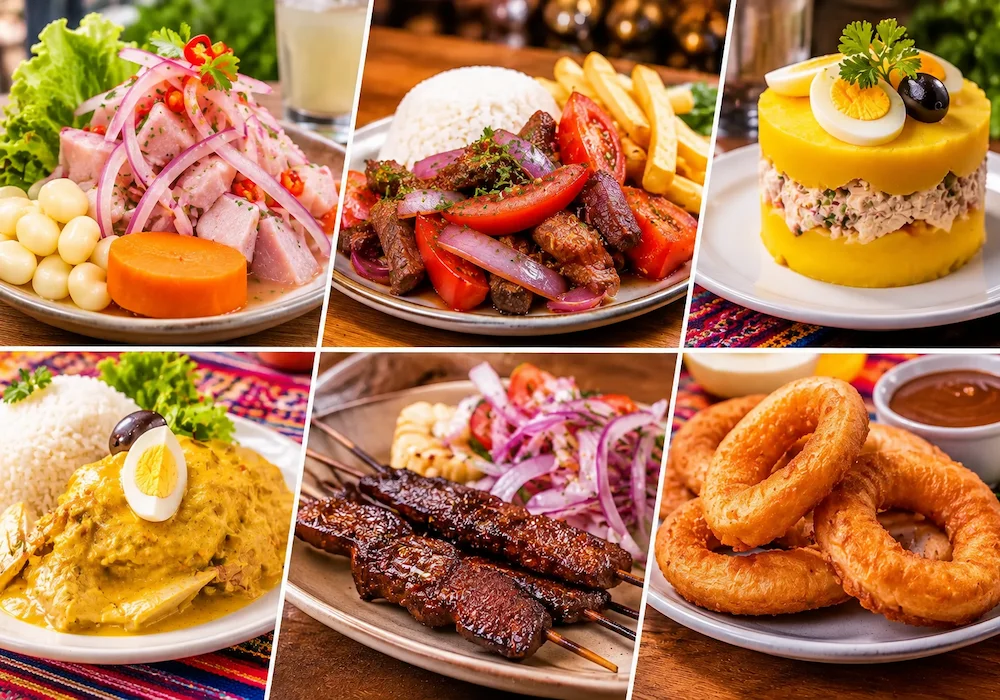
If you are visiting Lima for the first time, these six classic dishes offer the essential foundation to appreciate Peruvian flavor identity:
1. Classic Limeño Ceviche
Inscribed on UNESCO's Representative List of Intangible Cultural Heritage. Chunks of pristine fresh white ocean fish flash-cured in freshly squeezed Key lime juice, sliced limo chili, julienned red onion, giant Andean corn, and glazed sweet potato.
2. Wok-Seared Lomo Saltado
The pinnacle of Chinese-Peruvian fusion. Tender beef tenderloin strips flash-flambéed at high heat in a wok with red onions, ripe tomatoes, yellow chili peppers, and soy sauce, served over crispy French fries and fluffy rice.
3. Causa Rellena Limeña
Silky whipped yellow potato mash seasoned with ají amarillo paste, fresh lime, and oil, layered with shredded seasoned chicken breast or fresh crab meat, creamy avocado, and boiled egg.
4. Creamy Ají de Gallina
A comforting colonial chicken stew simmered in a velvety sauce of ají amarillo chilies, evaporated milk, chicken stock, grated parmesan cheese, and ground toasted pecans, garnished with Botija black olives.
5. Traditional Beef Heart Anticuchos
Living Afro-Peruvian colonial heritage. Tender beef heart skewers marinated in red ají panca paste, red vinegar, and garlic, seared over smoking hardwood coals and served with roasted potatoes.
6. Crispy Picarones with Chancaca Molasses
The quintessential Limeño street dessert. Light, airy fritter rings made from yeast dough enriched with boiled sweet potato and squash, flash-fried and drizzled with warm spiced raw cane syrup.
03 The Four Great Fusion Influences of Peruvian Food
Understanding Peruvian cuisine requires exploring its four defining cultural fusion pillars:
- Criollo Cooking: The Spanish-Indigenous-African synthesis forged inside colonial monastery kitchens and coastal haciendas. Brought onion-garlic sofrito bases, beef braises, and hearty stews accented by native chili pastes.
- Chifa Cuisine: The Cantonese-Peruvian symbiosis that blossomed in the mid-1800s with incoming Chinese workers. Introduced high-heat wok tossing, fresh ginger (kión), spring onions, and dark soy sauce, creating staples like lomo saltado and arroz chaufa.
- Nikkei Cuisine: The meeting of Japanese precision slicing with vibrant Peruvian chili peppers at the turn of the 20th century. Revolutionized modern ceviche preparation (curing fish to order) and birthed elegant sashimi-like tiradito.
- Amazonian & Andean Modernism: The contemporary resurgence of Amazonian river fish (paiche), smoked cecina, bellaco plantains, and nutrient-packed Andean grains (quinoa, kiwicha) celebrated in world-ranking tasting menus today.
04 Guided Culinary Experiences: Markets & Cooking Classes
For culinary travelers wanting hands-on engagement, Lima offers exceptional interactive food experiences:
Traditional Municipal Market Food Walks
Ingredient Discovery: Explore vibrant vendor stalls in Surquillo or San Isidro alongside a professional chef to sample exotic Amazonian fruits (chirimoya, lúcuma, passion fruit, camu camu) and learn about native tubers.
Hands-on Cooking Classes with a Local Chef
Interactive Workshop: Learn the precise knife skills for slicing fresh fish, balancing lime acidity, and creating silky tiger's milk (leche de tigre) to prepare authentic ceviche and causa from scratch.
Master Pisco Tastings Across 8 Grape Varieties
National Spirit: Taste the differences between pure, acholado, and green-must piscos made from non-aromatic and aromatic grapes, and master shaking a balanced 3-1-1 Pisco Sour.
Archaeological Dinners Overlooking Ancient Huacas
Atmospheric Dining: Savor contemporary Peruvian tasting menus while gazing directly upon the illuminated adobe pyramids of Huaca Pucllana or Huaca Huallamarca.
05 How to Choose the Best Food Tour in Lima
Keep these quality benchmarks in mind when booking your food adventure:
- Small Group Sizes (Max 8 to 10 Guests): Hands-on cooking instruction and bustling market navigation demand personal interaction with the host chef.
- Certified Food Safety Standards: Ensure the workshop kitchen and partner restaurants maintain strict municipal health credentials and continuous seafood refrigeration.
- All-Inclusive Transparent Pricing: Your tour should bundle all market fruit tastings, cooking ingredients, cocktails, and a full seated traditional lunch without hidden add-ons.
06 Practical Foodie Tips for Travelers in 2026
Enhance your culinary journey with these insider dining recommendations:
Limeños traditionally eat ceviche for lunch (12:00 to 15:30 PM), when morning fishermen catches are at their freshest peak.
Peruvian cuisine is flavorful rather than overwhelmingly fiery. If you have low chili tolerance, ask for dishes "sin picante" (no chili) with spicy creams served on the side.
Flagship restaurants like Central, Maido, and Astrid & Gastón open reservations 60 to 90 days in advance and sell out within minutes.
Drink bottled water and finish rich meals with soothing herbal teas such as hierbaluisa (lemongrass) or muña (Andean mint) for effortless digestion.
07 Savor Lima with the Official Gastronomic Tour
At Lima Tour Peru, we run daily departures for the Lima Gastronomic Tour, featuring private transit, a guided municipal market tasting walk, hands-on ceviche and Pisco Sour workshops with seasoned chefs, and a traditional seated lunch.
08 Frequently Asked Questions about Peruvian Gastronomy
Why is Peruvian gastronomy so celebrated worldwide?
Due to its extraordinary biodiversity of native ingredients (over 3,000 potato varieties, colorful chilies, and native corn) blended with five centuries of harmonious fusion with Spanish, African, Chinese, Japanese, and Italian cooking traditions.
What is the difference between criollo, chifa, and nikkei cuisine?
Criollo is the Spanish-Afro-Peruvian blend (ají de gallina, anticuchos); chifa is Cantonese-Peruvian wok cooking (lomo saltado, chaufa rice); and nikkei is Japanese-Peruvian fusion (sashimi-style tiraditos, chili-glazed maki).
Is it safe to eat ceviche in Lima for sensitive stomachs?
Yes, provided it is enjoyed at formal cevicherias, established restaurants, or certified food tours guaranteeing same-day fresh catch and rigorous hygiene standards.
What does a guided food tour in Lima include?
It includes a local market exploration tasting exotic native fruits, an interactive ceviche and Pisco Sour masterclass with a professional chef, and a full traditional lunch.
What is Peru's national cocktail and how is it prepared?
The Pisco Sour, crafted using three parts pure grape pisco (traditionally Quebranta), one part fresh Key lime juice, one part simple syrup, egg white for froth, and Angostura bitters.