

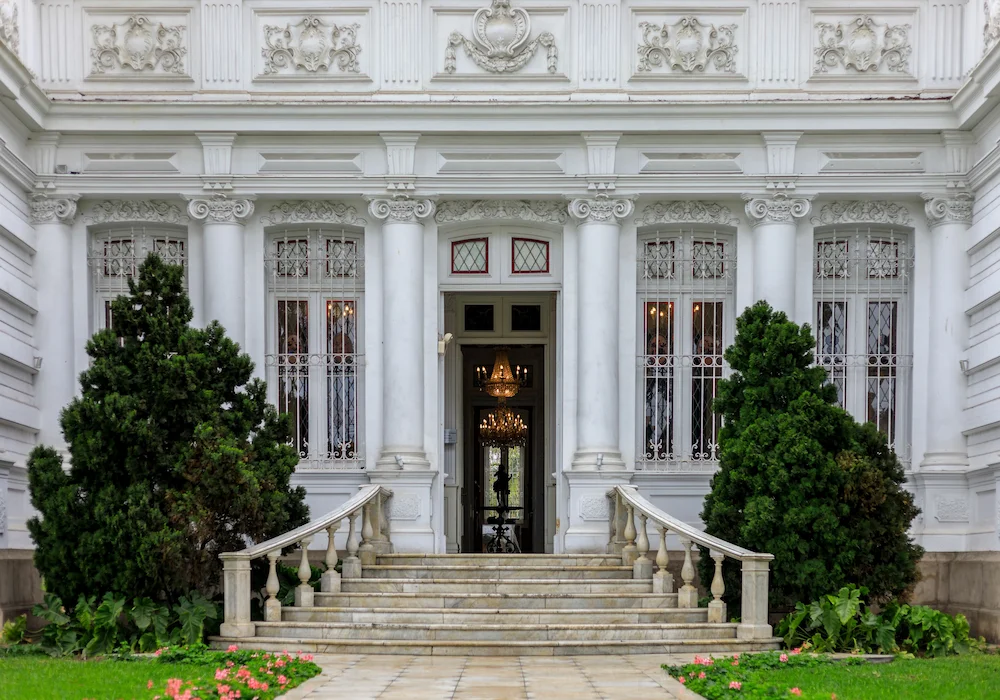
At the historic heart of the romantic bohemian district of Barranco, along the shaded, stately Pedro de Osma Avenue, lies one of Peru's most visually captivating cultural ensembles: the Pedro de Osma Museum. Housed in a magnificent French Belle Époque summer residence completed in 1901 by architect Santiago Basurco, this museum safeguards the most prestigious and complete private collection of Peruvian viceregal art (16th to 18th centuries) in South America. Lovingly assembled over decades by philanthropist and connoisseur Don Pedro de Osma Gildemeister, its refined galleries showcase iconic masterpieces of the Cusco Painting School—globally famed for its musket-bearing archangels and crowned triangular Virgins—alongside opulent colonial silver altarpieces, mother-of-pearl marquetry furniture, and delicate alabaster Huamanga stone sculptures, all nestled within century-old landscaped gardens shaded by ficus trees, palms, and French Art Nouveau stained glass.
01 Don Pedro de Osma & the 1901 Belle Époque Barranco Villa
Following the reconstruction period of the late 19th and early 20th centuries, the seaside resort town of Barranco emerged as the premier summer enclave for Lima's high society seeking fresh Pacific ocean breezes. Along its shaded avenues lined with tramways and ficus trees, the prominent De Osma family commissioned noted Spanish-Peruvian architect Santiago Basurco to design an opulent private estate, completed in 1901.
Conceived with the cosmopolitan grace of the French Belle Époque, the estate captivates with balustraded terraces, Ionic columns, mansard roofs, and soaring Art Nouveau stained glass windows. Within this romantic setting, Don Pedro de Osma Gildemeister (1901–1967), a distinguished connoisseur and philanthropist, spent more than four decades passionately gathering the most important private collection of viceregal Peruvian art in South America, creating a cultural treasure that officially opened to the public in 1988 under the Pedro and Angélica de Osma Gildemeister Foundation.
1901 Belle Époque Villa
Crafted by Santiago Basurco using imported hardwoods, ornate ceiling plasterwork, French stained glass, and harmonious European neoclassical proportions.
Collecting Devotion
Don Pedro de Osma traveled across Andean towns and colonial monasteries to acquire and restore endangered canvases, silver altarpieces, and sculptures.
Century-Old Gardens
The estate is immersed in an acre of landscaped grounds shaded by century-old ficus, royal palms, and Carrara marble statuary offering serene tranquility.
02 Cusco School Painting: Musket-Bearing Archangels & Triangular Virgins
The crown glory of the Pedro de Osma Museum is its world-renowned collection of Cusco School Painting from the 17th and 18th centuries. Emerging after the 1650 Cusco earthquake from the creative encounter between European baroque models and the spiritual cosmology of native Quechua master painters, this movement is recognized for brilliant jewel tones, hieratic compositions, and the intricate application of brocateado (raised gold leaf embossed upon the canvas).
The museum holds the most complete and celebrated series of Musket-Bearing Archangels (Arcángeles Arcabuceros) in existence. In these monumental works, celestial warriors such as Uriel, Sealtiel, and Salamiel don lavish aristocratic garments inspired by the court of King Philip IV of Spain: lace-trimmed brocade jackets, wide-brimmed hats adorned with Andean flamingo plumes, and silk ribbons, while elegantly cradling European gunpowder muskets and matchlocks.
The Musket and Andean Cosmology
In the Andean worldview, firearm-wielding archangels were intuitively identified with Illapa, the pre-Columbian deity of lightning, thunder, and life-giving rain. Similarly, the celebrated Triangular Virgins (such as the Virgin of Pomata or Candelaria) were depicted wearing stiff, pyramidal robes consciously styled to mimic sacred Apus (guardian mountain peaks) and evoke maternal devotion to Pachamama (Mother Earth).
03 Colonial Lima Silverware & Carved Huamanga Stone Sculptures
Throughout the viceregal era, Peru stood at the apex of global silver production driven by the staggering mineral riches of Potosí and Cerro de Pasco. Lima became the headquarters for the Americas' most prestigious silversmith guilds, crafting sumptuous liturgical pieces for cathedral altars and noble dining halls.
The museum's silver pavilion displays radiant radiant-sun monstrances set with emeralds and rubies, repoussé silver tabernacles, ceremonial incense burners (sahumadores) shaped as peacocks and armadillos, chased platters, and silver crowns that reflect flawless metalworking artistry.
Huamanga Alabaster Stone Sculptures
The museum preserves an extraordinary assemblage of sculptures carved from Piedra de Huamanga (native translucent white alabaster from Ayacucho). The stone's smooth, luminous quality allowed Andean artisans to carve intricate nativity scenes, tender Madonna figures, and crucifixes embellished with oil polychrome and gold leaf.
04 Belle Époque Architecture, French Stained Glass & Gardens
Exploring the Pedro de Osma Museum offers dual aesthetic pleasure: admiring the priceless viceregal artwork while immersing oneself in the architectural majesty of the mansion itself. Interior ceilings feature intricate ornamental plasterwork, polished oak parquet floors creak gently with history, and glass-enclosed galleries connecting inner courtyards are illuminated by dazzling French Art Nouveau stained glass that filters Lima's gentle coastal light into soft golden hues.
Art Nouveau Stained Glass
French stained glass galleries and skylights that wash the interior corridors in warm, golden afternoon light.
Historic Patios & Fountains
Carrara marble water fountains and 19th-century wrought-iron benches sheltered under coastal greenery.
Andean Art Pavilion
Contemporary garden pavilion housing ancient Tiahuanaco textiles and Inca ceramics that bridge ancient and viceregal art.
05 Comparison Guide: Key Galleries & Iconic Masterpieces
To ensure you do not miss any major artistic highlights during your visit, this comparison table details the landmark rooms across the mansion:
| Gallery or Space | Historic Period | Artistic Medium | Defining Landmark Work | Visual & Cultural Appeal |
|---|---|---|---|---|
|
Landmark Musket Archangels Gallery |
17th – 18th Century | Oil & embossed gold leaf on canvas | Series of Archangels Uriel, Sealtiel & Salamiel | The supreme icon of Andean viceregal syncretism |
| Marian Painting Gallery | Cusco School | Brocateado gilding & tempera | Virgen de Pomata & Virgen de la Candelaria | Triangular robes echoing sacred Andean mountain Apus |
| Colonial Silver Pavilion | 17th – 19th Century | Chased & repoussé .950 sterling silver | Processional monstrances & zoomorphic sahumadores | Testament to Peru's monumental silver mining wealth |
| Huamanga Stone Room | Ayacucho Tradition | Polychrome carved white alabaster | Devotional Andean nativities & saint figures | Miniature sculpting with microscopic decorative details |
| Marquetry & Furniture | Viceroyalty of Peru | Cedar, walnut, mother-of-pearl & tortoiseshell | Sevillian bargueño cabinets & monastic armchairs | Authentic aristocratic atmosphere of a Lima palace |
06 Visitor Information: Hours, 2026 Admission Fees & How to Arrive
The museum is located at Avenida Pedro de Osma 421, one of Barranco's most scenic streets, bordered by boutique art galleries, artisan coffee houses, and historic residences. Key details for planning your visit include:
2026 Hours & Ticket Prices
- Operating Schedule: Tuesday through Sunday from 10:00 AM to 6:00 PM (closed on Mondays).
- International Adults: S/ 30.00.
- Peruvian Residents: S/ 20.00.
- Students & Seniors (65+): S/ 15.00 (with valid accreditation).
- Children (under 11): Free entry.
- Barranco Cultural Combo Pass: Discounted joint tickets available covering Pedro de Osma Museum and nearby cultural venues.
07 Explore Barranco & Pedro de Osma with Lima Tour Peru
Visiting the Pedro de Osma Museum offers an idyllic introduction to the enchantment of Barranco: crossing the romantic Bridge of Sighs, walking down the Bajada de Baños to the Pacific shoreline, and savoring world-renowned Peruvian coastal cuisine.
At Lima Tour Peru, we feature this district in our Pachacamac Sanctuary & Bohemian Barranco Tour, seamlessly pairing the ancient pre-Inca desert temple in South Lima with the artistic refinement of Barranco, traveling in private climate-controlled transport alongside a dedicated expert guide.
Pachacamac Sanctuary & Bohemian Barranco Tour
Combine the ancient oracle temple of Pachacamac with viceregal art at Pedro de Osma Museum and the romantic avenues of Barranco.
Half Day · Daily DeparturesPrivate Bohemian Art & Heritage Tour
Design a private cultural circuit exploring Barranco's mansions, art studios, and museums with full transport flexibility.
Custom QuoteFor private bookings or tailored cultural itineraries across Lima, connect directly with our travel specialists through our Contact Us page or via WhatsApp.
Recommended reads: Bridge of Sighs in Barranco · Best Museums in Lima Guide · Torre Tagle Palace Guide.
08 Frequently Asked Questions
Who was Don Pedro de Osma Gildemeister?
Don Pedro de Osma Gildemeister (1901–1967) was an influential Peruvian attorney, diplomat, and philanthropist from a distinguished Lima family. He devoted his life and fortune to seeking out and acquiring scattered masterworks of viceregal painting, silver, and furniture that were at risk of being exported or lost, stipulating in his will that his summer villa in Barranco become a public art museum.
Why do the Cusco School archangels carry muskets (arcabuces)?
This is one of the most famous examples of Andean cultural syncretism. Spanish missionaries preached devotion to celestial armies, and native Quechua painters fused armed angels with Illapa, the ancient Andean god of lightning, thunder, and rain. The artists painted the archangels holding European firearms while wearing aristocratic brocade coats and Inca-feathered hats.
How long does a visit to the Pedro de Osma Museum take?
A complete visit through the main mansion galleries, the colonial silver pavilion, the contemporary Andean wing, and the historic gardens takes between 90 minutes and 2 hours at a leisurely, enjoyable pace.
What are the opening hours and 2026 admission prices?
The museum is open Tuesday through Sunday from 10:00 AM to 6:00 PM (closed on Mondays). Admission is S/ 30.00 for international adults, S/ 20.00 for Peruvian residents, S/ 15.00 for students and seniors, and free for children under 11.
How do I reach the museum from the Bridge of Sighs in Barranco?
It is located just four blocks south of the Bridge of Sighs and Barranco's central plaza. It is an easy, picturesque 5-to-7-minute walk along tree-lined, cobblestoned Pedro de Osma Avenue, passing stately Republican summer estates and art studios.