


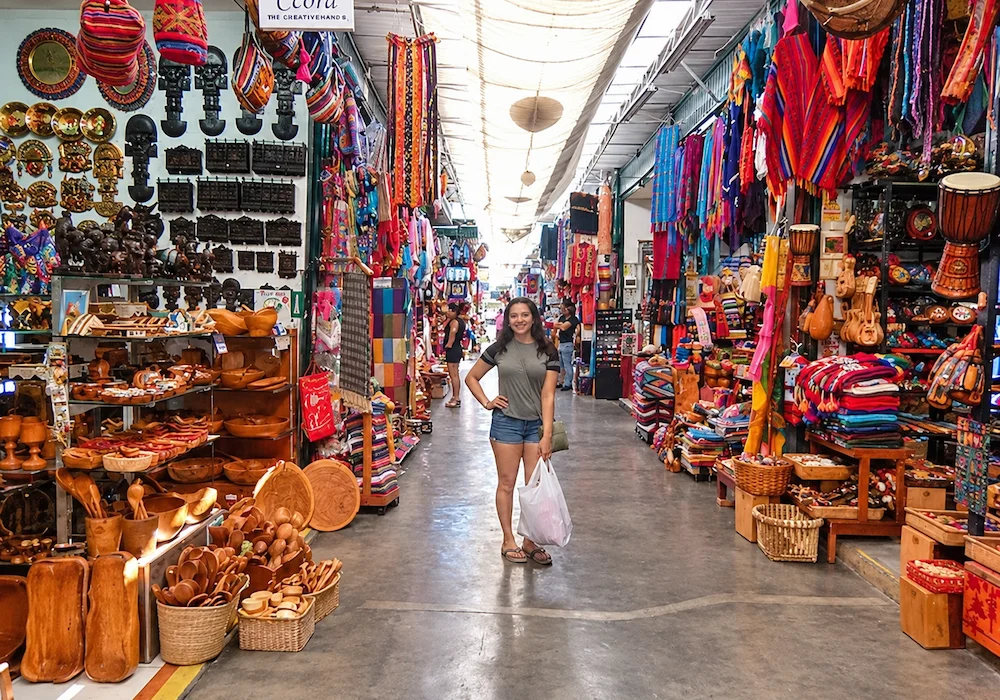
Nestled in the vibrant heart of Miraflores along blocks 52 to 55 of Avenida Petit Thouars stands the capital's premier handicraft quarter: the Inca Market (Mercado Inca) and the historic Indian Market (Mercado Indio). This bustling maze of covered galleries hosts over 300 master artisans and cooperative merchants hailing from Cusco, Ayacucho, Puno, Junín, Piura, and the Peruvian Amazon, making it the ultimate destination in Lima to purchase authentic artisan souvenirs. From whisper-soft baby alpaca scarves and cardigans to certified 950 sterling silver jewelry, Pucará bulls, intricate Ayacucho retablos, and burnished Chulucanas pottery, the variety is unparalleled. To help you distinguish genuine heirloom pieces from synthetic counterfeits, this comprehensive guide provides foolproof tests for authentic alpaca fiber, silver hallmark verification, realistic 2026 price benchmarks, ethical bargaining tips, and seamless tour planning.
01 Location & Artisan Market Complex on Av. Petit Thouars
For international travelers seeking museum-grade Peruvian handicrafts, authentic baby alpaca knitwear, and sterling silver jewelry without taking a domestic flight to Cusco or Puno, the upscale district of Miraflores houses Lima's largest and most accessible artisan shopping enclave: the Inca Market (Mercado Inca) and the adjoining Indian Market (Mercado Indio).
Conveniently positioned along Avenida Petit Thouars (spanning blocks 52 through 55, adjacent to block 52 of Avenida Arequipa), this vibrant bazaar district sits just a breezy 10-minute walk from Parque Kennedy and the Central Oval of Miraflores. Unlike standalone hotel souvenir boutiques, here more than 300 independent master artisans and craft families operate across interconnected covered arcades including Inca Market (Av. Petit Thouars 5330), Mercado Indio (Av. Petit Thouars 5245), Paseo Artesanal, and El Álamo.
The neighborhood is safe and thoroughly tourist-friendly, monitored continuously by Miraflores district patrol (Serenazgo) and Peru's specialized Tourist Police (POLTUR). Visitors can comfortably browse, touch textures, compare master craftsmanship, and converse with artisans in a relaxed, sunlit setting sheltered from city traffic.
02 Star Peruvian Handicrafts: Alpaca, 950 Silver, Retablos & Pottery
The standout virtue of the Inca Market is the pan-Peruvian diversity gathered under one roof. Each aisle represents a distinct regional artistic tradition rooted in centuries of ancestral know-how:
Genuine Alpaca & Baby Alpaca Knitwear
Hand-loomed textiles crafted from the golden fleece of the high Andes: featherlight scarves, draped ruanas, openwork cardigans, mittens, earflap chullos, and plush woven blankets created on backstrap and pedal looms by Andean cooperatives from Puno, Arequipa, and Cusco.
Peruvian 950 Sterling Silver Jewelry
Exquisite silversmithing merging viceregal filigree with pre-Inca motifs: rings, drop earrings, solid bangles, and pendants featuring the Andean Chakana (Southern Cross) or Inti sun god, bezel-set with genuine Andean opal, chrysocolla (Peruvian turquoise), and deep blue sodalite.
Traditional Ayacucho Retablos
Folk-art cedarwood altarpiece boxes with folding floral doors enclosing multi-tiered narrative dioramas. Each miniature human figure, saint, or Andean musician is meticulously sculpted by hand using a historic plaster paste of boiled potato starch and gypsum.
Folk Ceramics: Pucará Bulls & Chulucanas Vases
Glazed terracotta Pucará bulls symbolizing marital harmony, health, and prosperity for the home, alongside Piura's famous Chulucanas ceramic vessels, smoke-cured with mango tree leaves and burnished with river stones using ancestral Vicús negative slip-firing techniques.
03 How to Identify Genuine Baby Alpaca vs. Synthetic Acrylic
The foremost challenge facing international shoppers is distinguishing luxurious baby alpaca (the ultra-fine fleece harvested from an adult alpaca's first fleece shearing, boasting a microscopic thickness of just 20 to 22 microns) from synthetic blends or pure acrylic items labeled misleadingly as "alpaca blend" or "100% baby alpaca".
To ensure you purchase authentic heirloom pieces at fair prices, rely on these three sensory checkpoints used by seasoned textile appraisers:
1. The cool-touch test: Natural alpaca hair feels perceptibly cool and weighted upon first skin contact, gently warming to match your body temperature after several seconds. Cheap acrylic knits, conversely, feel immediately lukewarm, slippery, or synthetic.
2. The static friction test: Vigorously rub the knitwear against your cotton shirt or hair. Acrylic fibers create electric crackles and static flyaways; pure organic alpaca wool never produces static electricity.
3. The flame test (loose thread): Reliable vendors will gladly snip a stray thread and burn it with a lighter: genuine animal keratin smells like singed hair and crushes into delicate powdery gray ash. Acrylic melts instantaneously into a hard, plastic bead emitting a pungent petroleum odor.
04 Peruvian 950 Sterling Silver: Official Hallmarks & Quality Tips
Peru ranks among the world's leading silver producers, boasting centuries of celebrated silversmithing heritage. While the international standard for sterling silver is 925 (92.5% silver and 7.5% copper alloy), Peruvian artisans customarily work with 950 silver (95% pure refined silver). This superior ratio imparts a radiant, moon-white luster, elevated sculptural ductility, and exceptional tarnish resistance.
When selecting jewelry at the Inca Market, always inspect the piece closely for the artisan's hallmark punch. You should clearly see 950, PLATA 950, or PERU 950 micro-stamped on inner ring bands, necklace lobster clasps, or earring posts. Be wary of lightweight, greyish metal pieces lacking any hallmark: they are frequently nickel silver (maillechort or alpaca metal), an alloy of copper, nickel, and zinc containing zero precious silver.
Guaranteed Hallmark: 950 Silver vs. Nickel "Alpaca Metal"
When examining jewelry, always look for the engraved hallmark "950" or "PERU 950". Do not confuse alpaca fleece with alpaca metal: the latter is an inexpensive industrial alloy of nickel, copper, and zinc containing zero precious silver, which can trigger skin contact allergies.
05 2026 Price Benchmark Guide & Ethical Bargaining Tips
Bargaining (known locally as regateo) is fully accepted across the Inca Market and Indian Market, provided it is conducted with good humor, warmth, and mutual respect for the artisan's skilled manual labor.
As a general benchmark, vendors anticipate granting polite discounts of 10% to 20% below the initial quoted price, particularly when you buy multiple items from the same stall or pay in local currency (Soles cash).
| Handicraft Category | Material & Craft Technique | 2026 Price Range (PEN) | Approx. Range (USD) | Quality Check Verification |
|---|---|---|---|---|
|
Most Popular Pure Baby Alpaca Scarf |
100% loomed baby alpaca wool | S/ 70 – S/ 130 | $ 19 – $ 35 | Cool touch, static-free, fine wool ash |
| Alpaca Cardigan or Poncho | Tight-knit or hand-loomed weave | S/ 140 – S/ 280 | $ 38 – $ 75 | Weighted drape, retains shape after gentle stretching |
| 950 Silver Pendant (Chakana) | Solid silver with chrysocolla / spondylus | S/ 50 – S/ 110 | $ 14 – $ 30 | "950" hallmark micro-stamped on reverse bail |
| 950 Silver Ring with Andean Gem | Silver band with pink opal or sodalite | S/ 60 – S/ 140 | $ 16 – $ 38 | Solid bezel setting, seamless smooth interior |
| Medium Pucará Bull | Hand-painted glazed ceramic | S/ 35 – S/ 75 | $ 10 – $ 20 | Even glaze coats, stable flat base without cracks |
| Small Ayacucho Retablo Box | Polychrome cedar box, potato-paste figures | S/ 45 – S/ 95 | $ 12 – $ 26 | Sturdy metal/leather hinges, crisp micro-details |
| Embroidered Cushion / Table Runner | Cusco wool loom with natural vegetal dyes | S/ 40 – S/ 85 | $ 11 – $ 23 | Dense reverse stitching, colorfast vegetable dyes |
Golden rule: Aggressive haggling is considered impolite. Courteously ask "What is your best price if I purchase two pieces?" or "Is there a cash discount if I pay in Soles?" for a friendly, win-win transaction.
06 Opening Hours, Payment Methods & Tourist Safety Tips
Planning your visit to Miraflores' artisan district is remarkably straightforward and flexible:
2026 Operating Hours
Artisan arcades operate Monday through Sunday from 9:00 a.m. to 8:00 p.m. continuously throughout the entire year, including national holidays like Independence Day and Christmas.
Accepted Payment Methods
Approximately 85% of stalls accept major credit and debit cards (Visa, Mastercard, Amex) and contactless payments. However, paying in cash (Peruvian Soles) secures the best bargaining power and avoids the 3% to 5% card processing fee charged by some merchant terminals.
Safety & Verified ATMs
The Petit Thouars corridor is pleasant and secure. Directly across the avenue and along nearby Av. Angamos you will find secure bank ATMs (BCP, BBVA, Interbank, and Scotiabank) to withdraw local currency with foreign cards safely.
07 Combine Shopping with Private Lima Tour Peru Experiences
Visiting the Inca Market is the perfect finale to a cultural day tour in Lima. Our private and small-group city tours seamlessly blend colonial downtown history with Miraflores coastal highlights, including curated artisan stops with expert guidance:
Colonial & Modern Lima City Tour
Explore the UNESCO Historic Center, San Francisco Catacombs, and coastal Miraflores with tailored artisan shopping stops.
From US$ 35 per personColonial City Tour + Gourmet Lunch
Pair architectural marvels with an oceanfront multi-course traditional Peruvian buffet in Miraflores.
From US$ 70 per personAll private excursions feature professional drivers, climate-controlled vehicles, and 24/7 dedicated assistance. Contact our travel specialists via our Contact Us page.
Recommended reading: Huaca Pucllana Miraflores Pyramid Guide · Barranco Bohemian District Guide · Miraflores Malecon & Love Park Guide.
08 Frequently Asked Questions about Miraflores Inca Market
What is the exact difference between the Indian Market, the Inca Market, and surrounding Petit Thouars galleries?
They effectively form one expansive, contiguous handicraft district stretching over 4 blocks. The traditional Indian Market (block 52) and the Inca Market (block 53, #5330) are the two flagship historic complexes, interconnected with adjoining arcades such as El Álamo and Paseo Artesanal. Merchandise variety and pricing are broadly comparable across stalls, allowing visitors to browse the entire strip seamlessly as one unified open-air bazaar.
What customs regulations apply when exporting Peruvian handicrafts and how do I avoid issues with replica antiquities?
Exporting authentic pre-Columbian or viceregal archaeological artifacts from Peru is strictly illegal and subject to severe criminal penalties. All antique-looking ceramics, mummies, and textiles sold at the Inca Market are contemporary artisanal reproductions. To prevent customs delays at Jorge Chávez International Airport, always retain your vendor purchase receipts and ensure delicate replica pieces retain workshop tags marked 'Contemporary Artisan Reproduction'.
Can bulky or heavy handicraft purchases be shipped internationally directly from the market stalls?
Yes. Several established vendor stalls maintain direct logistics partnerships with international courier operators (Serpost national postal service, DHL, and FedEx). Furthermore, dedicated branch offices are located within walking distance on Av. Larco and Calle Schell, where fragile or heavy merchandise can be boxed in reinforced corrugated cardboard with bubble wrap and dispatched internationally with full tracking.
How should delicate Chulucanas pottery, retablos, and Pucará bulls be packed to avoid breakage during flights?
Artisans customarily wrap delicate purchases in multiple layers of bubble wrap and sturdy individual cardboard boxes free of charge or for a nominal fee. For high-risk items like hollow Chulucanas clay or fragile retablo figurines, request crumpled paper stuffing inside voids for interior shock absorption, and always transport fragile ceramics as cabin carry-on luggage rather than checked baggage.
Are packaged Peruvian gourmet products (specialty coffee, artisanal chocolate, pisco) sold at the Inca Market?
Yes. Several dedicated gourmet stalls offer certified specialty high-altitude coffees (Chanchamayo, Cusco, Villa Rica), single-origin craft chocolate bars boasting 70%+ native Chuncho and Amazonian cacao, Andean wild honey, and sealed bottles of authentic Pisco from Ica valleys bearing official Sunat tax seals. They make exceptional, vacuum-sealed gourmet gifts compliant with airline food transport regulations.