


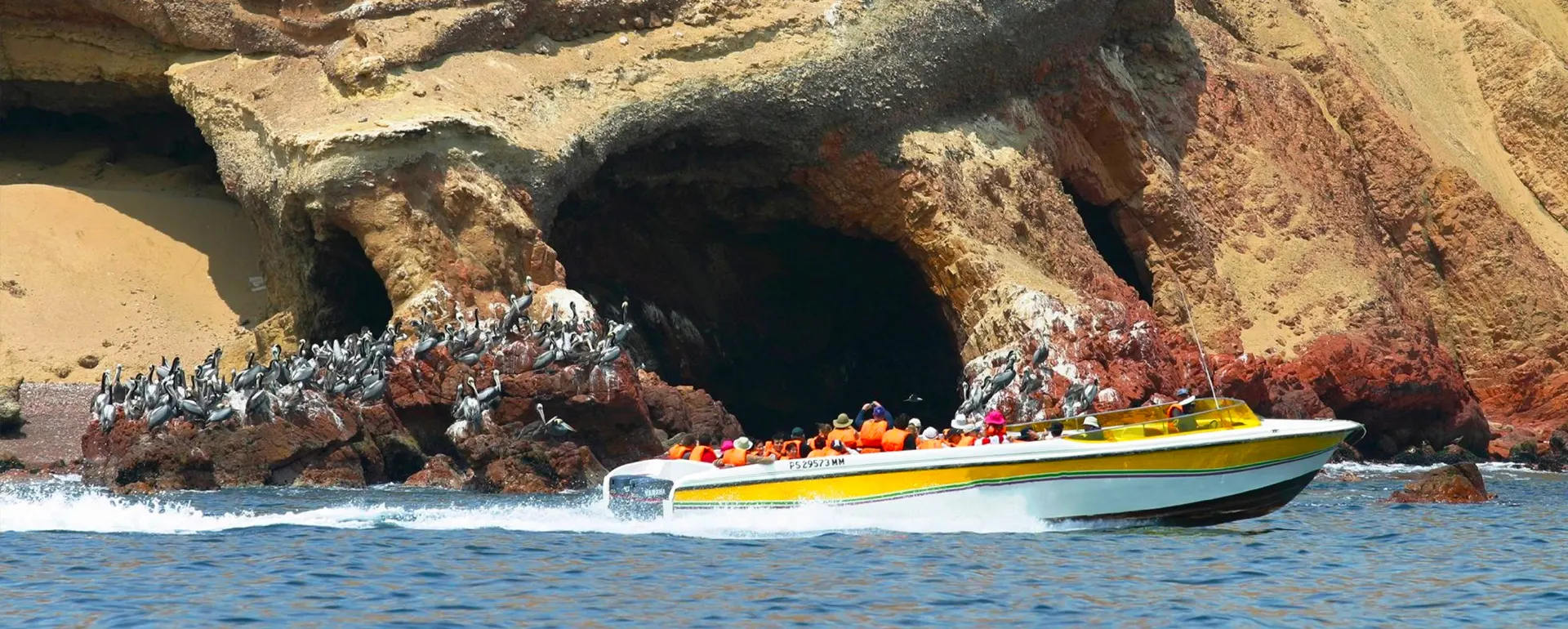
Known internationally as the "Galapagos of Peru", the Ballestas Islands represent one of the most biodiverse, spellbinding coastal ecosystems on earth. Located off the coast of Paracas in the region of Ica—just 3.5 hours south of Lima—this protected marine sanctuary offers travelers the once-in-a-lifetime thrill of observing thousands of sea lions, endangered Humboldt penguins, and millions of seabirds thriving in the nutrient-rich waters of the Pacific.
01 What to know about the Ballestas Islands ("Galapagos of Peru")
The Ballestas archipelago consists of three primary islands—Ballesta Norte, Ballesta Centro, and Ballesta Sur—along with dozens of dramatic sea stacks, arches, and islets. Their privileged location within the Humboldt Current (or Peru Current) brings freezing, oxygen-saturated waters straight from Antarctica to the equatorial coast. This upwelling phenomenon generates massive concentrations of plankton and anchovy, fueling an extraordinary food web.
02 History & Conservation: From Ancient Paracas to National Sanctuary
Human relationship with the Ballestas Islands stretches back over two millennia. Archeological evidence proves that ancient coastal cultures regarded these marine waters as a sacred, inexhaustible source of sustenance and spiritual reverence.
Paracas Civilization
Flourishing between 700 BC and 200 AD, master Paracas weavers and fishermen mastered ocean navigation on totora reed watercraft, harvesting shellfish and salt.
The Guano Boom Era
In the 19th century, guano accumulated on the islands became the world’s most prized natural fertilizer, financing Peru’s national infrastructure and economy.
National Reserve Status
In 1975, the Peruvian government created the Paracas National Reserve, guaranteeing sustainable ecotourism, environmental scientific research, and zero pollution.
03 Main Attractions: Marine Wildlife & El Candelabro Geoglyph
The 2-hour boat navigation through the Ballestas Islands is packed with natural wonders and archeological enigmas that leave travelers breathless:
Humboldt Penguin (Spheniscus humboldti)
A vulnerable flightless seabird unique to the cold currents of Chile and Peru. Standing 60 to 70 cm tall, they nest inside rocky burrows and glide through waves at speeds of up to 30 km/h.
Sea Lions: South American & Fur Seals
Massive colonies lounge upon rocky shelves. The South American sea lion (Otaria flavescens) is known for its loud barks and square snout, while the smaller South American fur seal features a softer coat and sharp muzzle.
Guano Seabirds & The Inca Tern
Clouds of Peruvian boobies perform dramatic synchronized plunge-dives, pelicans fly in tight formation, and the elegant Inca tern dazzles with its crimson bill and curling white moustache feathers.
El Candelabro de Paracas Geoglyph
Carved into the sandy cliffs of the peninsula, this massive 180-meter (600 ft) geoglyph has withstood desert winds for thousands of years. Theories range from a navigation beacon for sailors to a representation of the Southern Cross or the sacred trident of Viracocha.
04 Coastal Gastronomy: Traditional Flavors of Ica and Lima
A trip to the southern coast is incomplete without experiencing the celebrated seafood and Creole cuisine of Paracas, Chincha, and Ica:
Fresh Corvina Ceviche
Catch of the morning marinated in freshly squeezed lime juice, chili limo, glazed sweet potatoes, and crunchy Andean corn.
Chupe de Camarones
A rich, comforting chowder loaded with river prawns, golden potatoes, fresh cheese, poached eggs, and fragrant huacatay.
Carapulcra con Sopa Seca
The iconic "Mancha Pecho" Afro-Peruvian delicacy from Chincha: dehydrated potato stew paired with spiced noodles.
Traditional Pisco Sour
Crafted with premium Quebranta grape pisco distilled in the historic solar wineries of Ica, lime, syrup, and egg white.
05 Practical Tips: Best Hours, Gear, and Sea Conditions
To ensure a seamless, enjoyable visit to the Ballestas Islands, keep these insider recommendations in mind:
Sea conditions in the bay are calmest during morning hours. In the afternoon, strong coastal gusts called "Paracas" generate choppy waves, making morning trips far more comfortable.
Even on sunny days, oceanic breezes are brisk once the speedboat accelerates. Bring a lightweight windbreaker jacket, sunglasses with a neck cord, and a secure hat.
To protect nesting birds and resting sea lions, boats stay at a respectful distance. A telephoto lens or camera with 5x+ zoom will capture stunning wildlife close-ups.
If you are sensitive to boat motion, take a motion sickness pill (Dimenhydrinate) 30 to 45 minutes before boarding. Sit toward the middle or rear of the vessel for the smoothest ride.
06 Private Tours & Day Trips from Lima with Lima Tour Peru
At Lima Tour Perú (backed by the licensed RAP Travel Peru group), we specialize in private, door-to-door full day and multi-day journeys connecting Lima, Paracas, Ica, Huacachina, and Nazca:
Private Door-to-Door Transport
Pick-up and return directly from your hotel in Miraflores, San Isidro, Barranco or Lima Airport in modern air-conditioned vans.
Licensed Bilingual Guide
Official licensed guide accompanying your group with in-depth knowledge of marine biology, history, and local culture.
Modern Safe Speedboats
Modern vessels equipped with individual life jackets, dual outboard engines, and experienced certified coastal captains.
All Entrance Fees & Port Taxes
SERNANP national reserve permits and marina harbor taxes fully coordinated with skip-the-line convenience.
07 Frequently Asked Questions about Ballestas Islands
What is the best time of year to visit the Ballestas Islands?
The best time of year to visit the Ballestas Islands is between May and August. During these months, marine wildlife is at its peak, coinciding with the breeding and nesting season for Humboldt penguins and guano seabirds. Additionally, morning sea conditions in Paracas Bay are typically calm and favorable. However, Ballestas Islands tours operate successfully year-round with daily morning departures.
What are the Ballestas Islands and why are they so famous in Ica?
The Ballestas Islands are a dramatic group of rocky sea stacks situated off the Paracas Peninsula in the Ica region, approximately 3.5 hours south of Lima. Renowned globally as the "Galapagos of Peru", they protect a vital marine sanctuary hosting thousands of sea lions, endangered Humboldt penguins, and millions of seabirds thriving in the nutrient-rich Humboldt Current.
How long does the boat tour to the Ballestas Islands take?
The standard speedboat excursion takes approximately 2 hours in total. The boat first cruises along the coastline to the enigmatic Candelabra geoglyph (approx. 15 minutes) for a guided explanation and photo stop, before continuing to the outer islands to navigate around rocky arches and sea caves observing wildlife up close.
What is the Candelabra geoglyph and how can it be viewed?
The Paracas Candelabra is a colossal 180-meter-long geoglyph etched into the sandy hillsides of the Paracas Peninsula. Dating back over 2,500 years and attributed to the Paracas culture, it can only be fully appreciated from the sea on the boat ride to the Ballestas Islands, as land access is prohibited to preserve its ancient contours.
Can you see Humboldt penguins and sea lions year-round at Ballestas Islands?
Yes, both Humboldt penguins and sea lions (both South American sea lions and South American fur seals) are permanent resident species at the Ballestas Islands and can be spotted 365 days a year. Sightings are virtually guaranteed on morning boat excursions following SERNANP national park regulations.
What wildlife species inhabit Paracas Reserve and the Ballestas Islands?
The islands shelter immense colonies of guano seabirds including Peruvian boobies, Guanay cormorants, and Peruvian pelicans, alongside the striking Inca tern, grey gulls, and Andean flamingos in the bay. In surrounding waters, travelers frequently encounter bottlenose dolphins, marine otters, and green sea turtles.