

Few international travelers landing in Peru's sprawling capital realize that Lima is the only major metropolis in South America holding more than 400 legally protected archaeological monuments across its urban fabric, revered locally as huacas. Long before Spanish conquistadors founded the viceregal capital in 1535, the fertile coastal valleys of the Rímac, Lurín, and Chillón rivers fostered sophisticated civilizations spanning 5,000 continuous years: from Caral, the oldest city in the Americas contemporary with Egypt's pyramids, to the maritime oracle sanctuary of Pachacamac, where pilgrims journeyed from the furthest corners of the Inca Empire. This definitive guide explores Lima's premier archaeological landmarks, a comparative breakdown by traveler style, official hours, and private guided excursions.
01 Millenary Lima: The South American Capital of Over 400 Sacred Huacas
For the vast majority of international visitors, Peru's coastal capital evokes viceregal grandeur reflected in the carved balconies of the Historic Center, Pacific clifftop ocean parks in Miraflores, and its celebrated culinary accolades. Yet beneath the modern asphalt and framed by high-rise towers lies an astonishing archaeological truth: Lima is the only major metropolis in South America holding more than 400 legally cataloged pre-Columbian archaeological monuments, revered across generations as huacas.
In ancient Andean cosmology, the native Quechua term huaca (wak'a) denoted far more than an earthen pyramid: it represented any sacred landmark, shrine, oracle, or ancestor imbued with transcendent spiritual power. Ancient civilizations transformed the desert valleys of the Rímac, Lurín, and Chillón rivers into intensely ritualized territories through sophisticated irrigation canals that turned arid coastal plains into agricultural oases supporting hundreds of thousands of people.
5,000 Years of Continuous Civilizations
Spanning from the archaic maritime city of Caral (3000 BC) contemporary with the pyramids of Egypt, through the regional coastal cultures up to the Inca Empire (1470–1535 AD).
Monumental Hydraulic Engineering
Ancient canals including Surco, Huatica, and Maranga still flow beneath Lima's modern avenues today, irrigating municipal parks and residential districts across the capital.
Diverse Coastal Civilizations
The monuments showcase distinct cultural traditions: Lima, Wari, Ychsma, Chancay, and Inca, each contributing unique architecture, mud-brick techniques, and burial ceremonies.
Touring these ancient monuments grants deep insight into the engineering genius of coastal Andean peoples while offering a captivating temporal contrast where millenary adobe temples stand shoulder-to-shoulder with 21st-century skyscrapers.
02 Paramount Regional Sanctuaries: Coastal Pachacamac & 5,000-Year-Old Caral
Within the hierarchy of pre-Columbian South America, two monumental archaeological complexes in the Lima region stand as supreme world heritage landmarks:
Pachacamac Archaeological Sanctuary (Lurín Valley)
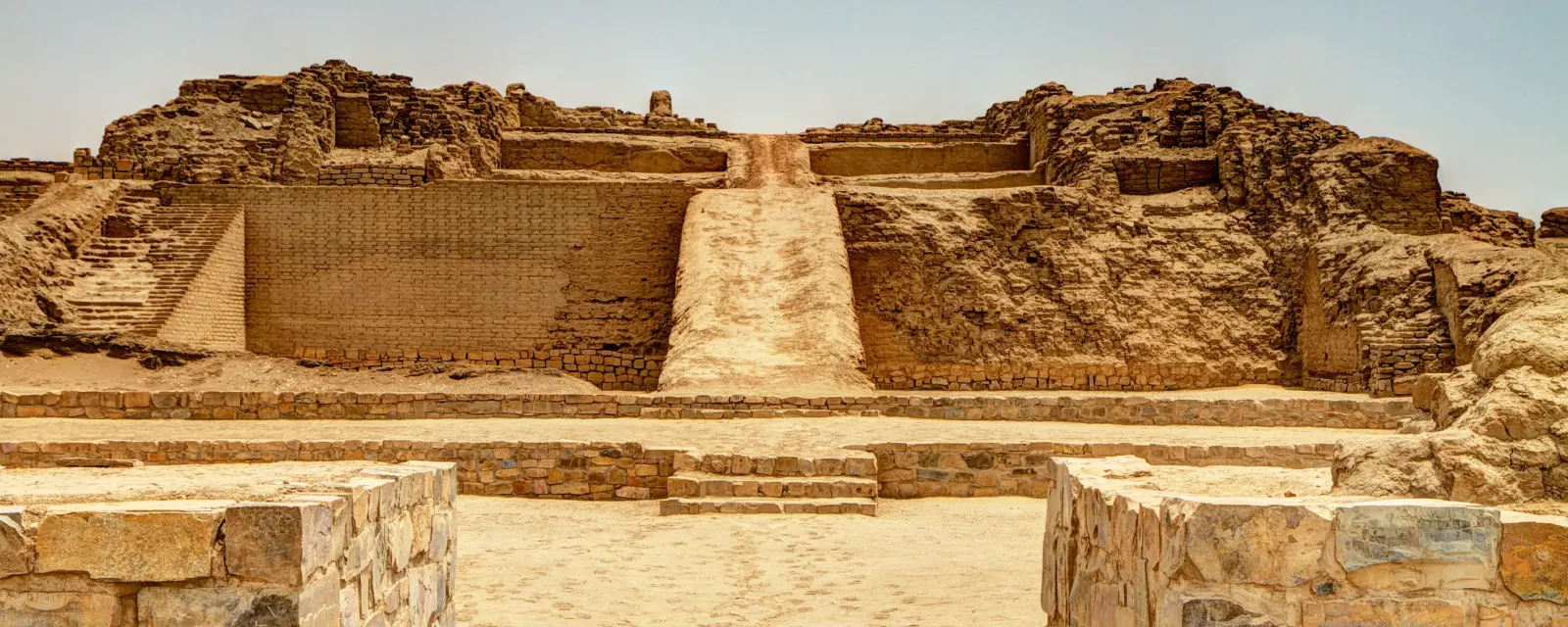
Located 31 kilometers south of Miraflores overlooking the Pacific Ocean, Pachacamac was the most revered and feared oracle in the Andes for more than a thousand years (200 AD to 1533 AD). Dedicated to Pachacamac, the deity of earthquakes and universal creation, it drew pilgrimage caravans from across South America. Highlights include the colossal red-adobe Temple of the Sun atop ocean bluffs, the Painted Temple, stepped ramp pyramids, and the restored Acllahuasi (Palace of the Sun Virgins) with trapezoidal stone niches.
Sacred City of Caral (Supe Valley, North of Lima)
Inscribed as a UNESCO World Heritage Site, Caral is celebrated as the oldest civilization in the Americas, dating back over 5,000 years (3000 BC to 1800 BC). Located 182 kilometers north of Lima, Caral features colossal stone platforms, sunken circular ceremonial plazas, sacred fire altars, and 32 carved bone flutes, demonstrating a peaceful civilization centered around astronomy, trade, and communal ritual.
Early Spanish chroniclers likened Pachacamac to Rome or Mecca. The dual-faced carved wooden idol pronounced prophecies through high priests following rigorous months of spiritual fasting and purification. Its divine authority was so absolute that Inca Emperor Huayna Cápac and his son Atahualpa regularly sought its counsel before military campaigns or state decisions. Today, its state-of-the-art on-site National Museum exhibits the original carved wooden idol and sacred textiles under international preservation standards.
03 Urban Huacas in the City: Pucllana, Huallamarca & Mateo Salado
For travelers with limited hours or seeking enriching archaeological detours close to their hotel base, these three urban monuments offer an extraordinary trip through time right within Lima's central districts:
Huaca Pucllana (Miraflores)
Lima's most celebrated urban pyramid. Erected by the Lima Culture around 500 AD, it is renowned for its earthquake-resistant «bookcase» adobe engineering, on-site museum with Wari ancestral bundles, native flora/fauna gardens, and romantic illuminated night tours paired with fine dining.
Huaca Huallamarca (San Isidro)
Standing in the heart of San Isidro's corporate financial district among high-rise towers. This ochre-yellow truncated pyramid features a sweeping central access ramp. It served as an elite cemetery for the Pinazo and Hualla cultures, yielding intact mummy bundles with braided natural hair.
Mateo Salado Archaeological Complex (Pueblo Libre / Breña)
The largest Ychsma-Inca administrative and ceremonial center within the traditional urban zone, featuring five massive stepped tapial pyramids. Named after French Lutheran hermit Matheus Salade, who resided in the ruins during the 16th century before facing the Spanish Inquisition.
04 Rímac Valley Masterpieces: Puruchuco Palace & Monumental Maranga
Venturing slightly inland toward the foothills and agricultural terraces of the Rímac Valley reveals monumental complexes celebrating civic and residential pre-Columbian architecture:
Puruchuco Palace (Ate Vitarte)
Regarded as the pinnacle of coastal secular palace architecture. Built with massive tapial walls in Ychsma and Inca times, it served as the official residence and judicial palace for the local regional governor (curaca). Its labyrinthine courtyards, zigzag corridors, and flawless acoustics in the audience court make it an architectural marvel.
Maranga Archaeological Complex (Legends Park, San Miguel)
With over 50 preserved mounds scattered across botanical gardens, Maranga formed one of the largest pre-Columbian mud-brick metropolises on the Pacific coast. Prominent monuments include Huaca San Miguel, Huaca La Cruz, and Huaca Middendorf, spanning 1,500 years of unbroken history.
05 Traveler's Comparative Guide: Distances, Visit Timing & Recommendations
To optimize your sightseeing schedule in Lima based on your available time and interests, consult our comparative overview of the capital's top archaeological destinations:
I Have Half a Day (3 to 4 hours)
Top pick: Huaca Pucllana in Miraflores or Huallamarca in San Isidro. Seamlessly explored on a Colonial & Modern City Tour without spending hours in regional transit.
I Have an Extended Half Day (4 to 5 hours)
Top pick: Pachacamac Sanctuary in Lurín Valley. Experience monumental oceanfront temples and pair the excursion with a romantic afternoon stroll across bohemian Barranco.
I Have a Full Day (Full Day Excursion)
Top pick: Sacred City of Caral in Supe Valley. A deep, rewarding full-day journey for travelers passionate about the earliest origins of human civilization.
06 Practical Tips for Touring Lima's Huacas: Sun, Footwear & Heritage Respect
To ensure your journey across Lima's ancient sites is completely safe, smooth, and respectful of protected national heritage, keep these essential guidelines in mind:
Open desert sites such as Pachacamac and Caral experience intense solar radiation and arid breezes year-round. Bring SPF 50+ sunscreen, a wide-brimmed hat, UV sunglasses, and plenty of drinking water.
Coastal huacas require walking across soft sand, packed earth, ramps, and ancient stone staircases. Wear comfortable running shoes or lightweight hiking sneakers; avoid open-toe sandals.
Remember that Huaca Pucllana is closed on Tuesdays and Pachacamac Sanctuary is closed on Mondays for archaeological preservation. Always double-check schedules prior to departure.
Sun-dried mud-brick architecture is delicate and irreplaceable. Always stick to authorized wooden boardwalks, never climb ceremonial walls, and follow all instructions from certified site guides.
07 Premier Archaeological Tours & Booking with Lima Tour Peru
As a licensed inbound tour operator under the RAP Travel Peru group (RUC 20490005022, certified by MINCETUR and PROMPERU), we offer curated excursions designed to bring ancient Andean history to life:
Pachacamac Sanctuary & Barranco
Half-day excursion exploring the Temple of the Sun, Acllahuasi (Palace of the Sun Virgins), and site museum, concluding in bohemian Barranco.
From US$ 45 per personColonial & Modern Lima City Tour
Scenic panoramic view of Huaca Pucllana, seaside Miraflores clifftop stroll, and walking tour through Lima's UNESCO Main Square and Catacombs.
From US$ 35 per personFull Day Caral Sacred City Tour
Full-day journey to the 5,000-year-old civilization in the Supe Valley: major pyramids, sunken circular courts, and authentic countryside lunch.
From US$ 130 per personPrivate Larco Museum Tour
World-renowned pre-Columbian gold, silver, and erotic pottery collection housed in an elegant 18th-century viceregal mansion.
From US$ 50 per personAll private tours include climate-controlled transport, hotel pickup and drop-off in Miraflores, San Isidro, and Barranco, licensed drivers, certified bilingual guides, and 24/7 dedicated support. Request your tailor-made quote via our Contact Us page.
Recommended reading: Huaca Pucllana Miraflores Guide · Historic Center of Lima · Lima Cathedral & Pizarro's Crypt · Bridge of Sighs in Barranco.
07 Frequently Asked Questions about Archaeological Sites & Huacas in Lima
How many archaeological sites or huacas exist in Lima?
Lima encompasses over 400 cataloged pre-Columbian archaeological monuments registered by the Ministry of Culture across its metropolitan area and river valleys (Rímac, Lurín, and Chillón). This remarkable density makes Lima South America's premier capital for ancestral mud-brick monuments integrated directly into modern urban life.
What is the difference between Huaca Pucllana and the Pachacamac Sanctuary?
Huaca Pucllana is an urban ceremonial stepped pyramid located in central Miraflores, built by the Lima Culture (200–700 AD) from small adobe bricks, ideal for a convenient 2-hour visit. In contrast, Pachacamac is a sprawling regional coastal oracle sanctuary spanning over 460 hectares in the Lurín Valley (40 minutes south), revered by the Lima, Wari, Ychsma, and Inca empires, famed for its massive Temple of the Sun and Acllahuasi palace.
Can the Sacred City of Caral be visited on a day trip from Lima?
Yes, via a dedicated Full Day Caral Tour. The archaeological complex lies 182 km north of Lima in the Supe Valley (approximately 3.5 to 4 hours each way along the North Pan-American Highway). Tours depart around 06:00 AM with private air-conditioned transport, guided walking tours across 5,000-year-old pyramids and sunken circular plazas, lunch, and return to Lima by 06:00 PM.
Which days are Lima's main archaeological sites closed for maintenance?
Huaca Pucllana (Miraflores) and Huaca Huallamarca (San Isidro) close on Tuesdays for preservation. The Pachacamac Archaeological Sanctuary closes on Mondays for institutional conservation. The Sacred City of Caral welcomes visitors daily year-round from 09:00 AM to 05:00 PM.
Which tour is recommended to experience archaeology and colonial history in limited time?
The Colonial & Modern Lima City Tour (half day) is the ideal choice: it combines guided panoramic vistas of Huaca Pucllana, coastal walks along Miraflores, and comprehensive exploration of Lima's UNESCO Historic Center, Main Square, and San Francisco Catacombs, maximizing cultural immersion while minimizing transit time.