

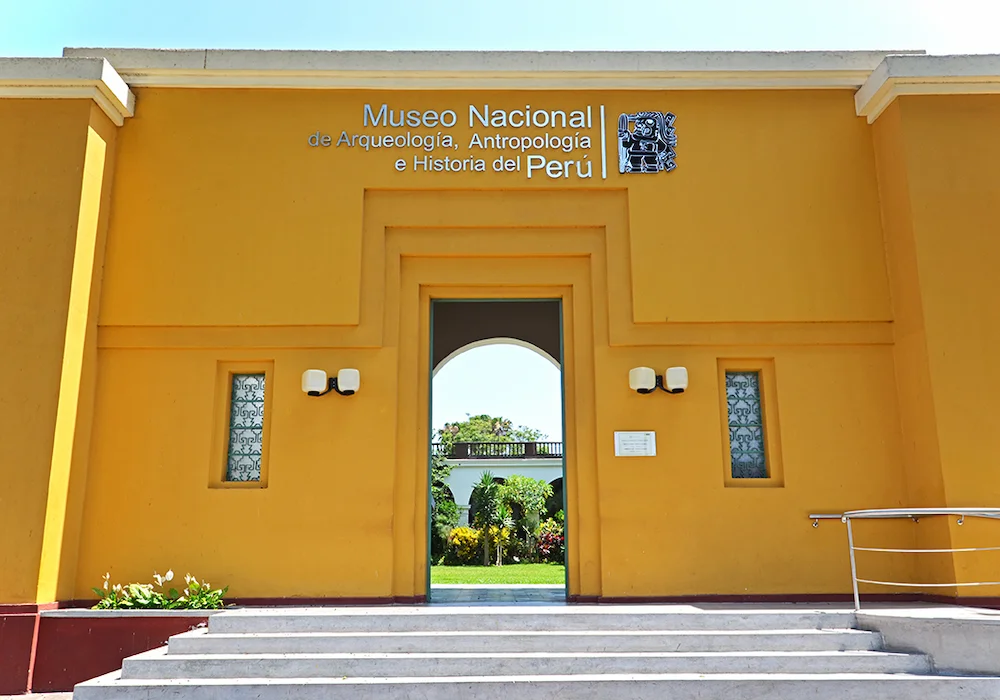
Situated across from historic Plaza Bolivar in the traditional district of Pueblo Libre, the National Museum of Archaeology, Anthropology and History of Peru (MNAAHP) is the country's oldest and most prestigious state museum institution. Formally established in 1822 under the decree of Protector Don Jose de San Martin and elevated by legendary scholars such as Mariano Eduardo de Rivero and Julio C. Tello, this heritage sanctuary houses the most exhaustive material record of Andean civilization: over 300,000 archaeological artifacts spanning from 12,000-year-old hunter-gatherer societies through the heights of the Inca Empire, alongside the storied Liberators' Country Estate, a magnificent viceregal residence where both San Martin and Simon Bolivar governed during the South American independence campaigns.
01 Origins and Stature: The First Museum of the Republic of Peru
Few cultural institutions across South America capture the soul, identity, and deep antiquity of a civilization as profoundly as the National Museum of Archaeology, Anthropology and History of Peru (MNAAHP). Conceived at the dawn of republican liberation in 1822 under the mandate of Protector Don Jose de San Martin, the museum was founded with a patriotic imperative: to safeguard indigenous heritage from pillage and instill national pride through scientific study.
Across the 19th and 20th centuries, this institution flourished through the dedicated research of global scholars. Foremost among them was Dr. Julio C. Tello, revered as the founding father of Peruvian archaeology, who methodically recovered, cataloged, and interpreted tens of thousands of artifacts unearthed from Chavin de Huantar, Paracas, and Casma. Today, set within the aristocratic viceregal Magdalena Country Estate in Pueblo Libre, the museum unites historic architectural grandeur with one of the most comprehensive archaeological archives in the world.
San Martin Mandate (1822)
Established just one year after Peru's Independence Declaration, serving as the foundational mother institution for the nation's entire museum network.
Julio C. Tello Heritage
Pioneering scientific excavations established the autonomous and autochthonous development of advanced Andean civilization over millennia.
Over 300,000 Cultural Treasures
Custodians of the most comprehensive lithic, textile, metallurgical, ceramic, and colonial art collections spanning twelve millennia of human presence.
The Living Cradle of Andean Archaeology
Unlike newer commercial galleries, MNAAHP is a government-backed national research and conservation sanctuary. Its master storage vaults preserve the original artifacts that allowed 20th-century scholars to establish the definitive cultural timeline of Peru.
02 Chavin Gallery: The Tello Obelisk and Raimondi Stele
The spiritual centerpiece of the pre-Columbian exhibit is the monumental Chavin Gallery, honoring the ancient ceremonial highland pilgrimage complex of Chavin de Huantar (1200 BCE - 400 BCE) in Ancash. As the cultural matrix of the Andean Formative era, Chavin priests developed an awe-inspiring lithic sculptural style carved in granite and diorite that projected divine power to initiates traveling across the Andes.
Here rests the original Tello Obelisk, an intact four-sided granite monolith standing over two and a half meters tall, covered in intricate low-relief carvings. Ranked among the masterpieces of ancient global iconography, it portrays a dual mythological caiman creator entity intimately intertwined with Amazonian fauna, sacred plants (chili peppers, manioc), and birds of prey. Nearby displays showcase the iconic Raimondi Stele, portraying the Staff God crowned by a towering, contour-rivalry tiara of fanged feline masks.
Original Tello Obelisk
Carved from a single polished granite pillar, this world-renowned monolith encapsulates the cosmic creation theology of the early Andean world.
Contour Rivalry Art
Chavin stone carvings incorporate intentional optical illusions: inverted viewings reveal human-like faces shifting into fanged predator mouths.
Monumental Tenon Heads
Original stone tenon heads embedded in ancient temple facades, depicting the psychological and shamanic transformation of priests into ferocious feline deities.
03 Pre-Inca Masterpieces: Paracas Textiles, Moche and Wari Ceramics
Venturing through the chronological wings, visitors encounter the staggering artistic heights achieved by coastal and highland cultures centuries before the Incas. The Paracas Cavernas and Paracas Necropolis (c. 700 BCE - 200 CE) textile halls exhibit ceremonial burial mantles woven from vicuña wool and desert cotton. Dyed with mineral and plant extracts, these fabrics retain vivid crimsons, golds, and deep blues after more than two millennia buried beneath arid desert sands.
Complementing the textiles are lifelike Moche portrait vessels capturing individualized facial expressions, political rulers, and dynamic combat scenes; polychrome Nazca ceramics depicting marine deities and trophy heads; and the monumental ceremonial vessels and woven tunics of the Wari Empire, South America's first urbanizing imperial powerhouse.
The Wonder of Paracas Mummy Bundles
The museum features a detailed educational unwrapping sequence of a conical Paracas funerary bundle, showing the progressive textile layers, protective woven mats, and hammered gold grave offerings nestled beside the deceased.
04 The Liberators' Country Estate: Residence of San Martin and Bolivar
What sets MNAAHP completely apart from conventional archaeology museums is that its physical building is itself an irreplaceable monument of hemispheric history. Commissioned in the late 18th century by Viceroy Joaquin de la Pezuela as a tranquil countryside manor, the estate was originally known as the Quinta de la Magdalena.
During the struggle for South American independence, the country palace served sequentially as the residential headquarters for the two foremost liberators of the continent:
San Martin Residence (1821-1822)
General Jose de San Martin established his official headquarters here while serving as Protector of Peru, enjoying respite from urban political intrigues.
Bolivar Headquarters (1823-1826)
The Liberator Simon Bolivar drafted crucial battle blueprints and diplomatic dispatches here during the decisive campaigns of Junin and Ayacucho.
Viceroys & Founders Gallery
Exhibits original colonial oil portraits of Spanish viceroys, fine carved mahogany furnishings, historic treaties, and personal mementos of patriot heroes.
05 Comparative Table: MNAAHP vs. Other Lima Archaeological Museums
To help craft your ideal cultural itinerary in Lima, compare the distinctive strengths of Pueblo Libre's National Museum with other leading archaeological sites:
| Museum / Site | District | Core Focus | Star Artifact | Adult Ticket (2026) |
|---|---|---|---|---|
| MNAAHP (Pueblo Libre) | Pueblo Libre | Complete Andean Archaeology and Republican History | Tello Obelisk / Raimondi Stele | 10 - 15 PEN |
| Larco Museum | Pueblo Libre | Private collection, erotic pottery & pre-Columbian gold | Moche Erotic Ceramic Gallery | 40 PEN |
| Amano Museum | Miraflores | Pre-Columbian textiles (Chancay emphasis) | Chancay funerary dolls and lace tapestries | 35 PEN |
| Huaca Pucllana Site Museum | Miraflores | In-situ ceremonial adobe pyramid & Lima culture | Truncated adobe pyramid with bookshelf architecture | 15 PEN |
06 Visiting Hours, Official Ticket Prices, and How to Get There in 2026
To ensure an effortless cultural visit, keep these practical logistics and tips in mind for 2026:
Opening Hours
Open Tuesday through Sunday from 9:00 a.m. to 5:00 p.m. (last entry at 4:15 p.m.). Closed on Mondays for museum maintenance and artifact conservation.
Ticket Prices
Standard adult entry: 10 to 15 PEN. University students with valid ID: 5 PEN. Minors and schoolchildren: 2 PEN. Seniors and disabled visitors enjoy a 50% discount.
Location & Transport
Located on Plaza Bolivar, Pueblo Libre. A taxi or ride-hailing app from Miraflores or San Isidro takes 20 to 35 minutes depending on traffic.
Creole Food Pairing: Traditional Pueblo Libre Stop
After touring MNAAHP, walk two short blocks to the iconic Antigua Taberna Queirolo (established in 1880). It is the quintessential spot to savor a traditional ham butifarra sandwich and toast with an authentic pisco chilcano before heading toward Larco Museum.
07 Discover Lima's Archaeological Heritage with Lima Tour Peru
For travelers seeking in-depth historical insight without the hassle of navigating traffic or queuing for tickets, Lima Tour Peru delivers expertly guided private excursions with licensed historical docents and modern air-conditioned transport:
Pueblo Libre Archaeology & Larco Museum Tour
Exclusive cultural excursion covering Pueblo Libre's premier archaeological sanctuaries, Plaza Bolivar, and the world-renowned Larco Museum collections.
Half Day · Daily DeparturesColonial & Modern Lima City Tour
The perfect blend of Lima's pre-Hispanic roots, viceregal monuments, and modern coastal neighborhoods across Miraflores, San Isidro, and Downtown.
Half Day · Private Transport08 Frequently Asked Questions about MNAAHP Pueblo Libre
Where exactly is the National Museum of Archaeology, Anthropology and History located?
It is located on Plaza Bolivar s/n (corner of Calle San Martin and Vivanco) in the historic heart of Pueblo Libre, just a 5-minute taxi drive or 15-minute walk from Larco Museum.
What iconic archaeological artifacts must not be missed at the museum?
Star highlights include the original carved granite Tello Obelisk (a 3,000-year-old masterpiece of Chavin lithic iconography), displays on the Raimondi Stele, an unmatched collection of Paracas Necropolis funerary bundles, and the Royal Tombs of Sican reconstruction.
What is the Liberators' Country Estate and why is it so historically significant?
It is an 18th-century viceregal country mansion commissioned by Viceroy Pezuela that served as the personal residence and headquarters for both General Jose de San Martin (1821-1822) and Simon Bolivar (1823-1826) during South American liberation.
What are the visiting hours and admission fees for MNAAHP in 2026?
It is typically open Tuesday to Sunday from 9:00 a.m. to 5:00 p.m. (closed on Mondays). General admission ranges between 10 and 15 PEN for adults, with concession rates for students, minors, and seniors upon presentation of valid ID.
Can a visit to MNAAHP be combined with nearby tourist attractions?
Yes, it makes an ideal full cultural circuit in Pueblo Libre. You can explore MNAAHP in the morning, savor traditional Creole fare and an authentic pisco sour at the historic 1880 Antigua Taberna Queirolo two blocks away, and visit Larco Museum in the afternoon.