


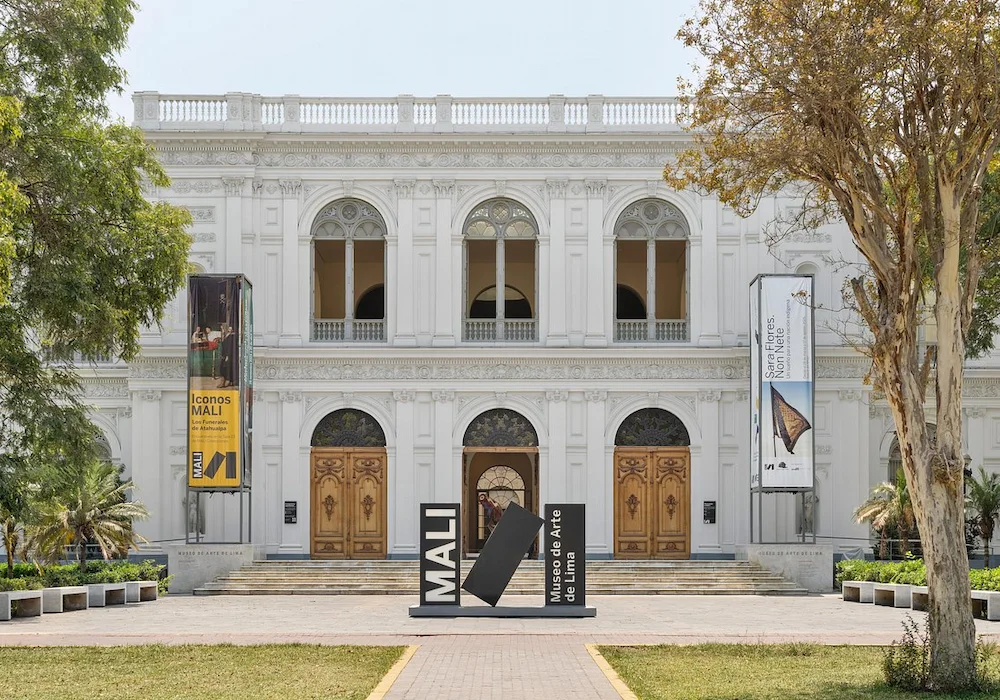
Housed within the monumental Exhibition Palace —one of South America's pioneering masterworks of Neo-Renaissance design and prefabricated cast-iron engineering, erected in 1872—, the Lima Art Museum (MALI) stands as Peru's foremost fine arts sanctuary and cultural epicenter. Its permanent second-floor galleries trace an unbroken visual journey through 3,000 years of Peruvian artistic expression: from ancient pre-Columbian textiles and ceremonial ceramics to the golden splendor of the viceregal Cusco Painting School, republican costumbrismo by Pancho Fierro, indigenist modernism led by Jose Sabogal, and cutting-edge 21st-century contemporary installations.
01 The Exhibition Palace: Cast-Iron Pioneer in South America
Even before admiring its very first canvas or ceremonial vessel, stepping into the Lima Art Museum (MALI) captivates visitors through its breathtaking physical home: the Exhibition Palace (Palacio de la Exposicion). Erected between 1869 and 1872 during the presidency of Jose Balta, this iconic monument was designed to host the Grand International Exhibition of 1872, celebrating the semi-centennial of Peruvian independence by showcasing the young republic's industrial, mining, agricultural, and cultural vigor to the world.
Conceived by celebrated Italian architect Antonio Leonardi, the palace stands as a historic milestone in South American civil engineering: it was among the continent's earliest public buildings to feature modular prefabricated cast-iron columns and trusses imported directly from Europe. Its four grand facades present a harmonious classical fusion of Doric, Ionic, and Corinthian pilasters and arches, transitioning naturally into the tranquil tree-lined grounds of Parque de la Exposicion.
1872 Historic Inauguration
Constructed for the landmark International Exhibition, standing as a triumphant symbol of late 19th-century Lima's economic prosperity and civic modernization.
Pioneering Cast-Iron Trusses
Innovative prefabricated structural iron engineering that allowed cavernous interior exhibition spaces flooded with diffused natural skylight.
Historic Park Setting
Nestled among ornate fountains, Moorish pavilions, and century-old ficus trees inside Parque de la Exposicion, at the southern gateway to Downtown.
State-of-the-Art Museum Renovation
Following a multi-million dollar architectural restoration spearheaded by the Patronato de las Artes and public partners, the palace's upper galleries were completely modernized to UNESCO international standards, featuring climate controls and LED fiber optics.
02 A Journey Across 3,000 Years of Peruvian Art: Permanent Collection
MALI's second-floor permanent collection occupies 34 beautifully restored galleries, presenting over 1,200 curated masterpieces from an institutional holding exceeding 17,000 registered artworks. The curatorial journey takes visitors through three millennia of continuous artistic dialogue:
Pre-Columbian Art
Moche, Nazca, and Chimu sculptural ceramics, intricate Paracas embroidered mantles, and ceremonial hammered gold ornaments revealing ancient Andean cosmologies.
Viceregal Art & Silver
Gilded baroque altarpieces, Cusco School canvases featuring triangular archangels with harquebuses, and masterfully chased silver from colonial mines.
19th & 20th Centuries
From Pancho Fierro's charming Lima street watercolors to Luis Montero's monumental patriotic canvases, mid-century indigenism, and abstract modernism.
03 Cusco School Paintings & Viceregal Silver: Colonial Splendor
Among the most acclaimed highlights in South America is MALI's viceregal wing. Following the catastrophic Cusco earthquake of 1650, indigenous and mestizo artists separated from the Spanish painters' guild to establish their own autonomous artistic movement. They abandoned European linear perspective in favor of solemn flat forms, dramatic gold leaf stenciling known as brocateado, and subtle indigenous motifs woven into Catholic biblical iconography.
Equally spellbinding is the Silverware Hall, showcasing over three centuries of silversmithing craftsmanship. Marvel at peacock-shaped incense burners (sahumerios), delicate filigree hairpins, colonial crowns studded with natural pearls, and ceremonial mate vessels crafted from Andean silver ores.
Syncretic Mountain Symbols in Marian Canvases
Notice the distinctly triangular silhouette of the Virgin Mary in Cusco School paintings: native artists intentionally shaped her wide bell-shaped skirts to mirror sacred Andean mountain peaks (Apus), venerating Mother Earth (Pachamama) under Catholic imagery.
04 From Costumbrismo to Indigenism and 20th-Century Avant-Garde
The shift into republican visual culture begins with the expressive watercolors of afro-descendant artist Pancho Fierro, capturing everyday 19th-century street life, shrouded ladies (tapadas limeñas), street vendors, and militia commanders. Dominating the grand historical gallery is Luis Montero's colossal canvas The Funeral of Atahualpa (1867), painted in Florence and depicting the grief-stricken Inca wives surrounding their murdered emperor.
Transitioning into the 20th century, the Indigenist Movement gained fierce momentum under Jose Sabogal and Julia Codesido, championing the cultural dignity and earthy vitality of indigenous Andean peoples. The permanent circuit culminates with the geometric lyrical abstractions of Fernando de Szyszlo, the dreamscapes of Tilsa Tsuchiya, and innovative conceptual installations.
The Funeral of Atahualpa
Peru's most famous academic 19th-century historical painting, measuring over 3 by 4 meters, declared a National Cultural Heritage treasure.
Indigenist Movement
Masterpieces by Jose Sabogal that rejected European neoclassical conventions to place indigenous Andean identity at the center of Peruvian art.
Modern & Contemporary Works
Pioneering mid-century abstraction, historic photography archives (Martin Chambi, Courret), and provocative 21st-century contemporary mixed media.
05 Comparative Table: MALI vs. Other Fine Art Galleries in Lima
To tailor your cultural exploration of Lima, review this side-by-side comparison of the capital's prominent art institutions:
| Art Museum | District | Core Focus | Architectural Setting | Admission (2026) |
|---|---|---|---|---|
| MALI (Lima Art Museum) | Parque de la Exposicion | 3,000 years of Peruvian art (encyclopedic) | Exhibition Palace (1872 cast-iron) | 30 PEN foreign / 15 PEN domestic |
| Pedro de Osma Museum | Barranco | Viceregal Cusco painting & fine silver | Belle Epoque French summer mansion | 40 PEN |
| MAC Lima (Contemporary) | Barranco | Post-1950 modern and contemporary art | Modernist pavilion with outdoor water mirrors | 25 PEN |
| MUCEN (BCR Central Museum) | Historic Downtown | Pre-Hispanic gold vault, coins & painting | Neoclassical 1929 central bank palace | Free Admission |
06 Location, Visiting Hours, and Updated 2026 Admission Fees
Plan your museum itinerary with these practical visitor details updated for 2026:
Hours of Operation
Tuesday to Sunday from 10:30 a.m. to 6:00 p.m. (Saturdays extended until 7:00 p.m.). Closed on Mondays for conservation maintenance.
Admission Rates 2026
International adults: 30 PEN. Peruvian citizens & residents: 15 PEN. Students, educators, and seniors (65+): 5 PEN. Children under 8 enter free.
Transit & Accessibility
Paseo Colon 125, inside Parque de la Exposicion. Direct connection via the Metropolitano rapid bus (Estacion Central, exit Paseo Colon).
Relaxing Stop at MALI Cafe
The tranquil MALI Cafe on the open terrace is the perfect place to enjoy highland specialty coffees from Chanchamayo, artisan sandwiches, and gourmet limeño desserts surrounded by neoclassical park gardens.
07 Experience Lima's Fine Arts with Lima Tour Peru City Tour
Exploring Lima's vibrant artistic heritage is infinitely richer with licensed art historians and door-to-door comfort. Lima Tour Peru seamlessly incorporates the capital's premier architectural landmarks into curated excursions:
Colonial & Modern Lima City Tour
Complete cultural journey encompassing Parque de la Exposicion, the Main Square, Government Palace, San Francisco Catacombs, and upscale oceanfront Miraflores.
Half Day · Daily ExcursionsBohemian Barranco & Pachacamac Sanctuary Tour
Connect ancient ceremonial archaeology with the bohemian artistic soul, historic galleries, and colonial mansions of Barranco.
Half Day · Expert Docent08 Frequently Asked Questions about Lima Art Museum (MALI)
Where is MALI located and what is the safest way to get there?
MALI is located at Paseo Colon 125, inside the Parque de la Exposicion, bridging Historic Downtown Lima and Jesus Maria. The fastest and safest transit options are the Metropolitano bus (Estacion Central) or ride-hailing app taxis.
What are the must-see galleries and star masterpieces at MALI?
Do not miss the Viceregal and Republican Silver Gallery, the Colonial Painting Hall (Cusco baroque canvases), Pancho Fierro's costumbrist watercolors, Luis Montero's monumental "The Funeral of Atahualpa", and the Indigenist gallery with works by Jose Sabogal and Julia Codesido.
What additional amenities and facilities does the museum offer visitors?
MALI features the acclaimed MALI Cafe in its shaded garden terrace, a curated design and art bookshop, web-streamed audio guides, specialized art library, climate-controlled halls, and full wheelchair accessibility with ramps and elevators.
How much is admission and are there discount or free entry days?
In 2026, general admission for international adults is 30 PEN, while Peruvian citizens and residents pay 15 PEN. Students, teachers, and seniors pay 5 PEN. Additionally, the first Sunday of each month often features discounted or complimentary entry depending on cultural schedules.
How much time is needed to tour the entire Lima Art Museum?
A thorough tour of the second-floor permanent collection and ground-floor temporary exhibitions takes between 1.5 and 2.5 hours. We recommend adding 45 minutes to relax with coffee or local pastries on the garden terrace.