
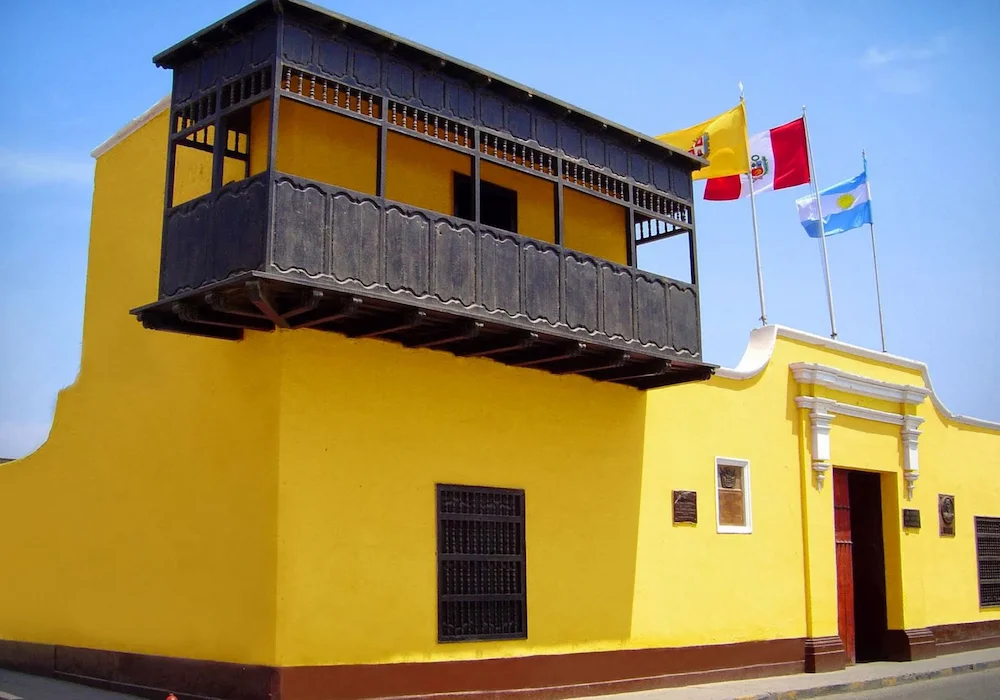
Months before Lima Plaza Mayor witnessed the solemn proclamation of July 28, 1821, General José de San Martín established his revolutionary headquarters in the coastal town of Huaura, 154 kilometers north of Lima. From the wooden balcony of a viceregal manor, the Liberator first proclaimed the freedom of Peru on November 27, 1820.
01 The 1820 Historic Milestone: San Martín in Huaura
Following the Paracas landing in September 1820 and recognizing that besieging the viceregal capital demanded cutting off royalist logistical supplies, the Liberating Expedition shifted northward. In November 1820, General José de San Martín disembarked in Huacho and set up his revolutionary military headquarters in neighboring Huaura.
From this strategic river valley, San Martín enacted the landmark *Provisional Regulations of Huaura* on February 12, 1821, dividing liberated territories into departments and establishing constitutional governance for Peru. Months earlier, from the wooden balcony of his headquarters, the Liberator proclaimed the freedom of Peru before gathered townspeople and soldiers.
First Proclamation of Independence (November 27, 1820)
Eight months before the central oath in Lima Plaza Mayor, General San Martín proclaimed freedom in Huaura: "Peru is from this moment free and independent by the general will of the peoples and by the justice of its cause that God defends". The manor was declared a National Historic Monument by Law No. 9636.
Travelers exploring Peru monumental sites can pair the City Tour Lima Colonial & Modern with a northern excursion to trace how the independence movement connected the coast with the capital.
02 Viceregal Architecture of the Manor and Carved Balcony
The Huaura viceregal mansion represents one of the finest preserved 18th-century residences on the northern coast. Its construction showcases seismic-resistant methods adapted to coastal geography:
Adobe and Quincha Manor
Heavy adobe brick walls on the ground floor topped with a flexible second level of quincha (woven cane coated in plaster). Native carob wood beams and clay roofing insulate against desert heat.
Carved Cedar Wood Balcony
An open continuous balcony with finely turned balusters carved from American cedar jutting out over the main avenue, offering an unobstructed vantage over the historic town square.
Plaza de Armas & Bell Tower
Directly facing the balcony lies the town square and a standalone colonial bell tower whose bronze bells rang out across the valley immediately following the 1820 proclamation.
03 Site Museum Galleries and Liberating Expedition Relics
The interior of the historic manor houses a dedicated Memorial Museum preserving authenticated relics from Peru independence struggle:
- General San Martín Official Study: Restored with original period furniture, including the oak writing desk and cordovan leather armchair where the Liberator drafted the Provisional Regulations of Huaura.
- Early Peruvian Republican Banners: Faithful reproductions and period textile fragments of Peru first national flag designed by San Martín in Pisco (diagonal red and white fields with a rising sun).
- Military Cavalry Sabers and Firearms: Historic cavalry swords from the Mounted Grenadiers regiment, flintlock muskets, bayonets, and bronze cannons utilized during the coastal liberation campaign.
- Original Manuscripts and Printed Proclamations: Primary documents printed on the mobile press traveling alongside the patriot army, spreading republican ideas among coastal populations.
For more insights on coastal military architecture, see our guide on the Real Felipe Fortress in Callao.
04 Comparison of Peru Independence Heritage Sites
Review the timeline and functional significance among prominent independence landmarks in Lima and the northern coast:
| Historic Monument | Key Date | Central Milestone | Location |
|---|---|---|---|
|
First Freedom Cry Huaura Balcony |
November 27, 1820 | First Proclamation of Independence | Huaura (km 154 North Pan-American Hwy) |
| Lima Main Square (Plaza Mayor) | July 28, 1821 | Solemn Official Proclamation in Capital | Downtown Historic Center of Lima |
| Real Felipe Fortress | January 1826 | Final surrender of Spanish royalist forces | Plaza Independencia, Callao Port |
05 How to Visit Huaura from Lima: Hours and Practical Tips
To arrange a smooth cultural visit to the Huaura Balcony, keep these practical travel tips in mind:
Driving from Lima takes approximately 2 hours and 30 minutes on modern paved highways. Huaura is situated only 5 km north of coastal Huacho city.
Open Monday through Saturday from 9:00 AM to 5:00 PM and Sundays from 9:00 AM to 2:00 PM. Admission is a modest municipal preservation fee.
We recommend pairing Huaura in a full-day tour including the ancient pyramids of Caral in the morning and a seafood lunch along Huacho waterfront.
06 Frequently Asked Questions about Huaura Balcony
Why did San Martín choose Huaura to establish his headquarters?
Huaura provided an exceptional strategic military position: it controlled the fertile Huaura River valley for troop provisions, connected seamlessly with Huacho and Chancay seaports, and effectively severed royalist supply lines heading south toward Lima.
Is the Huaura Balcony the original structure from 1820?
Yes, the manor house and its carved cedar wooden balcony preserve 18th and 19th-century colonial craftsmanship, meticulously restored to commemorate the Sesquicentennial and Bicentennial of Peru Independence.
Can visitors tour the interior of the historic manor house?
Yes, the property operates as an official Site Museum and Independence Memorial, displaying San Martin office, historic weaponry, military uniforms, and original independence declarations.
How long does a visit to Huaura Balcony take?
Exploring the museum galleries, inner colonial courtyard, and viewing the balcony takes between 45 minutes and one hour, making it an ideal inclusion alongside Huacho or the Sacred City of Caral.
What is the driving distance between Lima and Huaura?
Huaura is situated 154 kilometers (95 miles) north of Lima, taking roughly two-and-a-half hours along the North Pan-American Highway on fully paved, secure roads.