


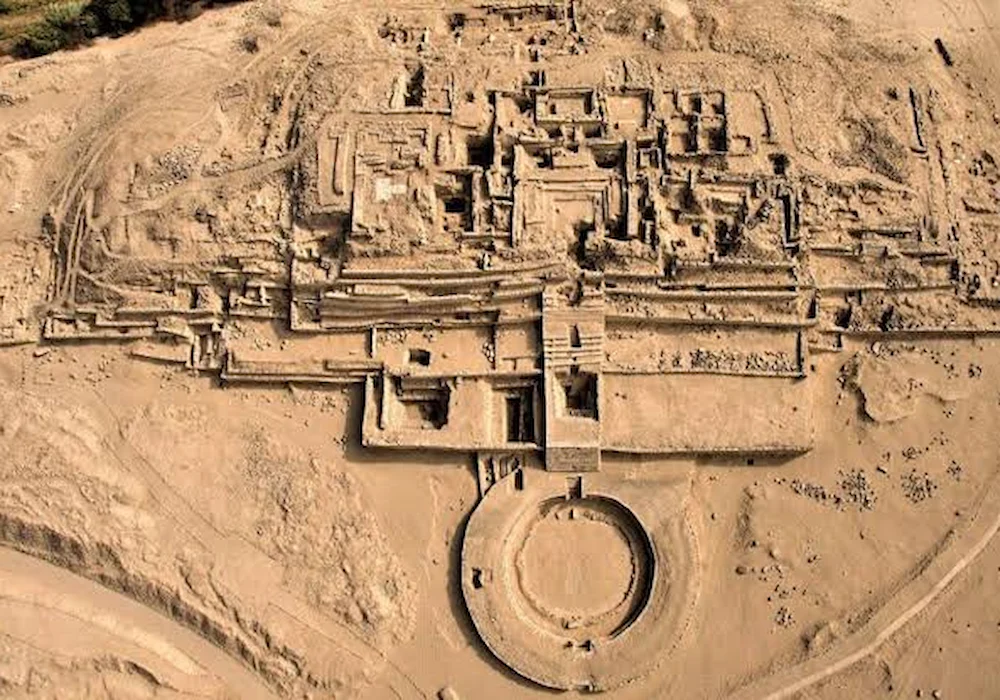
With an antiquity dating back 5,000 years (3000 BCE - 1800 BCE), the Sacred City of Caral is the oldest known civilization in the Americas, flourishing contemporaneously with Egypt pyramids and Mesopotamia cities. Located in the desert Supe Valley, 182 kilometers north of Lima, Caral amazes with tiered pyramids, seismic-resistant architecture, and a peaceful trade-based society.
01 Caral, Cradle of Civilization in the Americas: Antiquity and Significance
Archaeological investigations led since 1996 by Dr. Ruth Shady Solís proved to the global scientific community that an advanced pristine civilization thrived in Peru Supe Valley contemporaneously with Egypt Giza pyramids and Sumerian city-states in Mesopotamia. With radiocarbon calibrations confirming its peak between 3000 and 1800 BCE, Caral transformed global historical paradigms by placing the Americas among the six independent original cradles of human civilization.
Unlike Old World early civilizations shaped by military strongholds and warfare weaponry, excavations at Caral revealed no defensive ramparts, battle fortifications, or specialized weapons. It was a trade-based and ceremonial society anchoring authority in astronomical knowledge, hydrological engineering, and peaceful maritime-agricultural exchange.
UNESCO World Heritage Site (2009)
UNESCO inscribed the Sacred City of Caral-Supe on the World Heritage List in recognition of its monumental urban planning, spatial hierarchy, and pioneering earthquake-resistant engineering utilizing shicras (woven vegetable-fiber bags filled with stone boulders).
To experience this day trip from Lima, the Caral Sacred City Full Day Tour provides private transport and guidance by a licensed professional.
02 Major Pyramids and Sunken Circular Plazas
The urban core of Caral covers 66 hectares across a river terrace protected from seasonal Supe River flooding. It comprises 32 stone and mud monumental compounds:
Major Pyramid & Sunken Circular Plaza
The city most commanding structure (150 meters long by 18 meters tall). Directly facing its grand central staircase lies a circular sunken plaza engineered with natural acoustic resonance for mass civic gatherings.
Amphitheater Temple
A walled ceremonial complex featuring tiered circular seating where archaeologists uncovered a ritual offering cache containing 32 transverse flutes carved from pelican wing bones.
Gallery Pyramid
Tiered ceremonial complex preserving an interior stone-lined underground corridor where high priests performed secluded rituals before ascending to the upper terrace.
03 Scientific Discoveries and Ritual Symbolism
Excavations across the Supe Valley yielded remarkable insights into early astronomical, physical, and agricultural engineering in ancient South America:
- Pelican and Guanaco Bone Flutes: A set of 32 finely incised wind instruments decorated with bird and serpent motifs, indicating that communal music played an essential cohesive role in sacred gatherings.
- The Archaic Quipu of Caral: A knotted cotton textile string discovered in the Gallery Pyramid, predating Inca record-keeping by nearly four millennia and attesting to early decimal accounting.
- Sacred Fire Altars with Venturi Air Ducts: Circular ceremonial hearths with sub-floor ventilation shafts utilizing the Venturi fluid-dynamic principle to sustain continuous combustion without smoke accumulation.
- Color-Dyed Cotton Fishing Nets: Naturally colored cotton fibers cultivated inland to weave sturdy fishing nets, traded extensively with coastal fishermen at Áspero for sardine and mollusk protein.
To contrast this archaic foundation with metropolitan coastal sanctuaries, explore our complete guide to Pachacamac Archaeological Sanctuary.
04 Comparison: Visiting Caral vs. Other Archaeological Routes from Lima
When selecting which archaeological excursions to prioritize during your stay in Lima, consult this comparative overview:
| Archaeological Site | Estimated Antiquity | Distance from Miraflores | Tour Format |
|---|---|---|---|
|
Sacred City of Caral Supe Valley |
3000 BCE (5,000 years) | 182 km north (3.5 hours) | Full Day Tour (10 to 12 hours) |
| Pachacamac Sanctuary (Lurín) | 200 CE - 1533 CE | 32 km south (45 minutes) | Half Day Tour (4 to 5 hours) |
| Huaca Pucllana (Miraflores) | 500 CE (Lima Culture) | Within Miraflores district | Short city stop (2 hours) |
05 Travel Logistics: How to Get There from Lima, Hours, and Climate
Visiting Caral requires proper travel planning and awareness of coastal desert conditions:
Travel north from Lima along the Pan-American Highway to km 182, turning inland along the Supe River valley road for 23 km up to the official visitor reception center.
Supe Valley enjoys year-round dry sunshine with midday temperatures exceeding 28 °C (82 °F) and afternoon desert gusts. Pack lightweight breathable layers, trekking shoes, wide-brim hat, and a windbreaker.
Lima Tour Peru full-day excursions include a traditional lunch stop in coastal Huacho, renowned for fresh ceviche and regional duck stew, re-energizing you before the return drive.
06 Frequently Asked Questions about Caral Sacred City
How long is the drive from Lima to Caral?
The drive along the North Pan-American Highway (km 182) takes approximately 3.5 to 4 hours each way in private transport, including a brief morning rest stop in Chancay or Huacho.
Can Caral be visited year-round?
Yes, the site operates daily year-round. Between January and March, seasonal rains swell the Supe River, during which vehicle access routes adjust via the pedestrian suspension bridge.
Is a local guide mandatory when visiting Caral?
Yes, the Caral Archaeological Zone (ZAC) mandates that all visitor groups tour the monuments alongside an accredited guide to ensure strict preservation of fragile excavation pathways.
Does the Caral tour include additional stops along the northern coast?
Yes, in addition to the guided walk through Caral pyramids, the itinerary features a scenic lunch stop in coastal Huacho or Chancay to savor regional seafood and artisanal pastries.
Is the walking circuit at Caral physically demanding for senior travelers?
The visitor trail is relatively flat and well-graded, equipped with safety railings and shaded rest pavilions. The physical effort is moderate, requiring only comfortable footwear, steady hydration, and sun protection.