


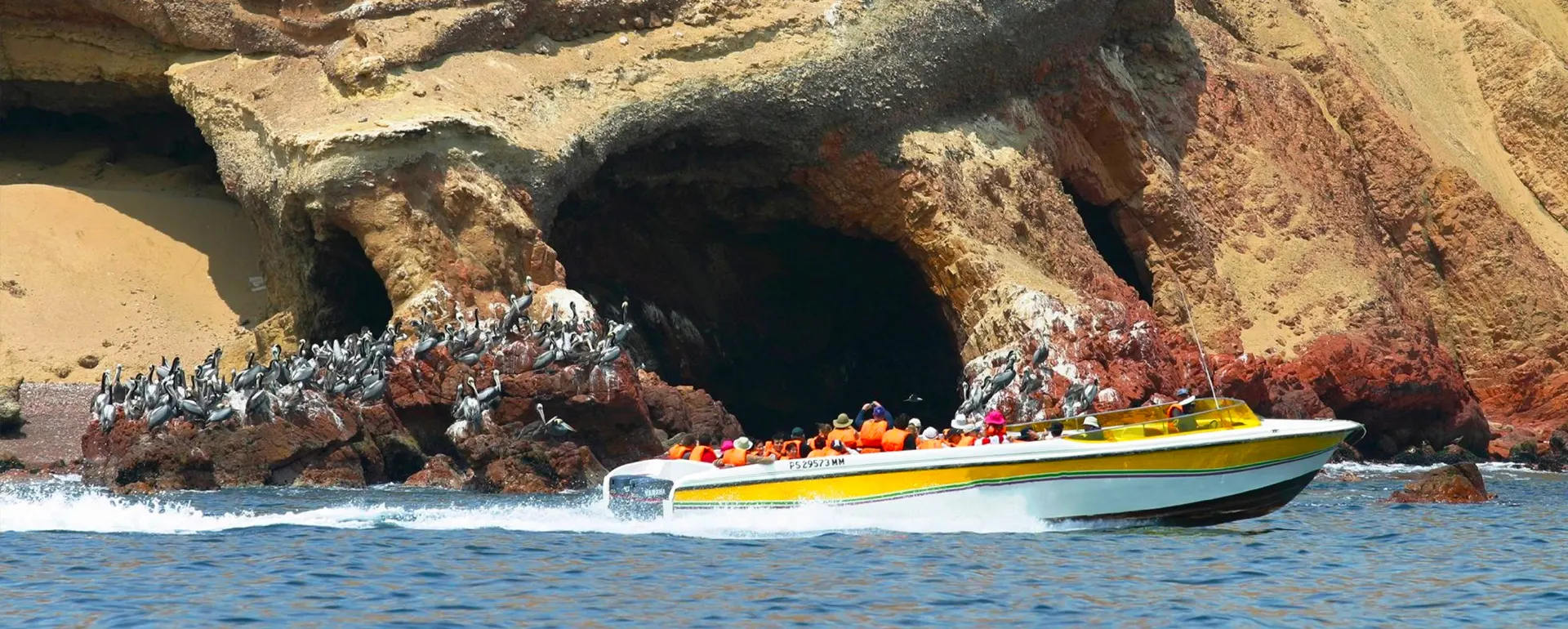
Globally celebrated as the «Peruvian Galapagos», the Ballestas Islands are a protected archipelago of rugged sea stacks situated off Paracas Bay. Their extraordinary biological prominence stems directly from the cold Humboldt Current: nutrient-dense upwelling waters fuel massive schools of anchoveta, supporting one of the highest densities of marine mammals and seabirds anywhere on Earth.
01 Ballestas Islands: The Humboldt Current Marine Sanctuary
Globally celebrated as the «Peruvian Galapagos», the Ballestas Islands are a protected archipelago of rugged sea stacks and arches situated off Paracas Bay. Their extraordinary biological prominence stems directly from the cold Humboldt Current: nutrient-dense upwelling waters fuel massive schools of anchoveta, supporting one of the highest densities of marine mammals and seabirds anywhere on the globe.
Protected within the National Reserve System of Guano Islands and Islets (SERNANP), these islands remain strictly uninhabited to allow breeding cycles to proceed undisturbed. Exploration is conducted exclusively via certified motor launches departing from El Chaco tourist pier, featured as a premier highlight in the Paracas & Ballestas Islands Full Day Tour departing directly from Lima.
Strict Inviolate Wildlife Sanctuary
To safeguard nesting cycles and sea lion harems, tourist foot landings on the islands are strictly forbidden. Cruises maintain regulated safety speeds and buffer distances enforced by SERNANP rangers.
02 Iconic Wildlife: Sea Lions, Humboldt Penguins & Guano Birds
During the two-hour boat loop through rocky arches and protected sea caves, passengers observe extraordinary wildlife at close range in pristine ocean conditions:
South American Sea Lions & Fur Seals
Marine MammalsThousands of sea lions bask lazily upon wave-cut rock ledges and swim playfully alongside tour boats. Massive dominant bulls weighing upwards of 350 kilos fiercely patrol maternity beaches during summer birthing seasons.
Humboldt Penguin (Spheniscus humboldti)
Vulnerable SpeciesThis endearing flightless bird burrows in fossilized guano deposits and rocky crevices. The Ballestas archipelago shelters one of the healthiest wild breeding sanctuaries for this internationally protected species.
Guano Birds: Peruvian Booby, Pelican & Cormorant
Guano SeabirdsMillions of nesting seabirds cover the high island plateaus. Boobies execute breathtaking vertical plunge-dives for fish, while the striking Inca Tern (Larosterna inca) is easily identified by its crimson bill and white curling handlebar mustaches.
03 The Paracas Candelabro: Mysterious Giant Sand Geoglyph
En route to the islands, tour speedboats pause before the northwestern cliff face of Paracas Peninsula to inspect El Candelabro (The Candelabra). Measuring over 180 meters in length with trenches carved three meters deep into compact coastal sand, this enigmatic geoglyph has withstood desert elements for centuries.
Navigational Beacon
Precisely aligned with the Southern Cross constellation, historians suggest it served as a daytime coastal beacon for pre-Hispanic trading balsas sailing South America's Pacific rim.
Aeolian Preservation
Despite constant coastal gales, the lines remain crisp: the cliff contour channels wind currents laterally while ocean salt spray cements the underlying sandstone matrix.
Ritual Symbolism
Archaeologists connect its shape to the sacred hallucinogenic San Pedro cactus or the lighting trident staff of Andean creator deity Viracocha, tied to oceanic fertility.
04 Tour Logistics: El Chaco Marina, Timetables & Park Rules
Cruises to Ballestas Islands are strictly supervised by Pisco Port Captaincy and SERNANP park wardens to safeguard visitors and marine life:
This early departure is highly recommended. The ocean remains smooth and windless before midday thermal gales start, ensuring comfortable cruising without seasickness.
Coast guard rules mandate that all passengers must keep approved life vests fastened for the entire duration of the boat ride.
Boats navigate safely around the perimeter without touching land. Drones are strictly forbidden to protect fragile nesting colonies.
Open speedboat travel across Pacific waters generates chilly ocean wind chill even on bright sunny mornings. Hat straps prevent gear loss.
05 Boat Tour Comparison and Excursion Alternatives
Review the maritime service formats available from Paracas Marina:
| Tour Service Format | Vessel & Capacity | Guiding & Comfort | Core Advantage |
|---|---|---|---|
| All-Inclusive Full Day Tour (Lima Tour Peru) | Fast eco-friendly 4-stroke outboard speed launch | Certified bilingual marine guide, cushioned seating, pier harbor taxes included | Skip-the-line marina boarding, synchronized with Ica & Huacachina the same day |
| Private Charter Yacht | Exclusive vessel for 10 to 16 private guests | Custom nautical cruising pace, extended photography stops | Total privacy for families, filming crews, or scientific researchers |
| Standard Pier Shared Launch | Larger public boats (35 to 45 passengers) | PA-system live narration; requires independent ticket and park fee purchases | Budget-friendly for travelers already staying in Paracas town |
06 Frequently Asked Questions about Ballestas Islands Tours
Is it possible to step off the boat and walk onto the Ballestas Islands?
No. The Ballestas Islands are a strictly protected wildlife sanctuary. Stepping onto the islands is prohibited for travelers to protect nesting colonies and sea lion harems. The entire excursion takes place safely aboard speedboats at close viewing distance.
Can travelers prone to motion sickness comfortably take the boat tour?
Yes, particularly on the 08:00 AM departure when ocean waters are flat and calm. Taking motion sickness medication (dimenhydrinate) 30 minutes before boarding and choosing middle seats minimizes boat motion.
How long does the Ballestas Islands boat tour take from start to finish?
The boat trip lasts approximately 2 hours in total: 30 minutes cruising out (including stopping at El Candelabro), 50 minutes of slow circumnavigation around the islands and wildlife caves, and 40 minutes returning to port.
What time of year can visitors see the greatest number of sea lion pups?
The sea lion pupping and breeding season occurs during the southern summer, between January and March, when island maternity coves are teeming with newborn pups interacting in tidal pools.
What park entry fees and port taxes apply to visit the islands?
Visitors pay the local El Chaco pier fee and the SERNANP marine reserve conservation ticket. On Lima Tour Peru organized packages, all port taxes and official conservation entries are fully covered.